When the power fails in a Riyadh tower, Jeddah hotel, or Dammam industrial facility, the emergency lighting system is the difference between an orderly evacuation and chaos. Facility managers across
 English
 English
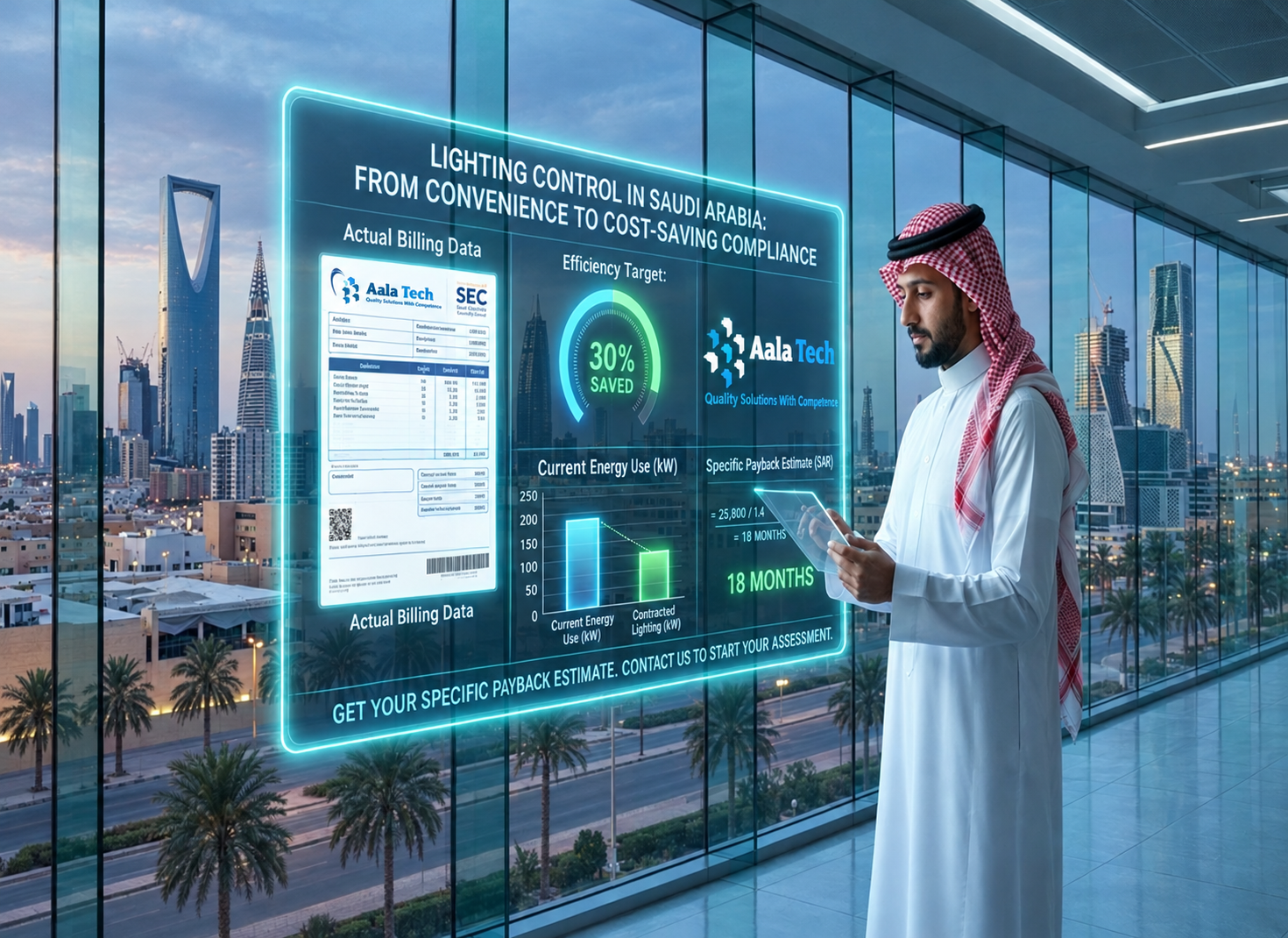
 Lighting is the simplest efficiency win that most Saudi buildings still ignore. Switches stay on in empty rooms, lights burn at full power while the sun pours in, and the bill climbs every month. Lighting control solutions in Saudi Arabia fix this automatically, cutting energy use while making every space more comfortable. This guide explains how the technology works, what it costs you to keep ignoring it, and how to choose the right partner across the Kingdom.
Ready to see what intelligent lighting could do for your building? Explore Aala Tech’s lighting control system solutions.
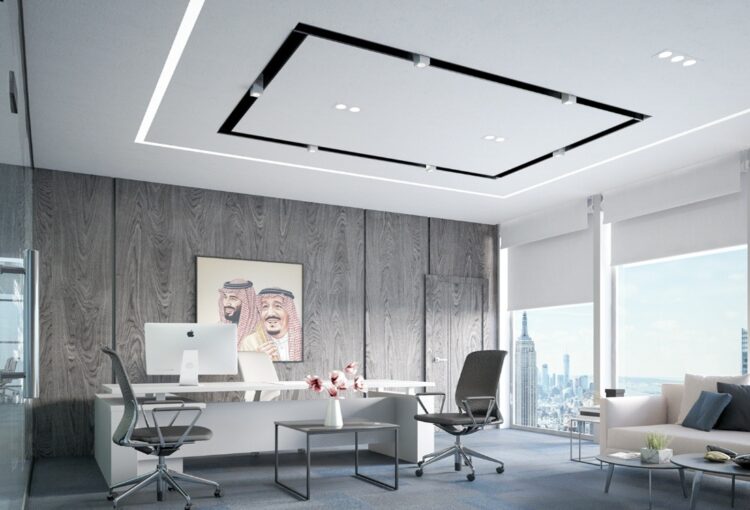
A lighting control system is an intelligent network that manages how, when, and how brightly the lights in a building operate. Instead of a manual switch that only knows on and off, it uses sensors, dimmers, and software to adjust lighting based on real conditions.
It does four things continuously. It senses who is present and how much daylight is available. It decides the right light level using preset rules. It acts by dimming or switching fittings smoothly. And it reports energy use back to a central dashboard.
That last step matters more than people expect. A system that proves its savings is far easier to justify to an owner than one that simply promises them.
Every system shares a familiar set of parts. Occupancy and presence sensors detect movement. Daylight sensors measure natural light. Dimmers and drivers adjust brightness. Control panels and keypads let people set scenes. And a central platform ties it all together and runs schedules.
The real value appears through integration. A good system connects to your wider building management system, so lighting, cooling, and energy are managed together rather than as separate islands. For more on that backbone, this guide to what a building management system is is a useful primer.
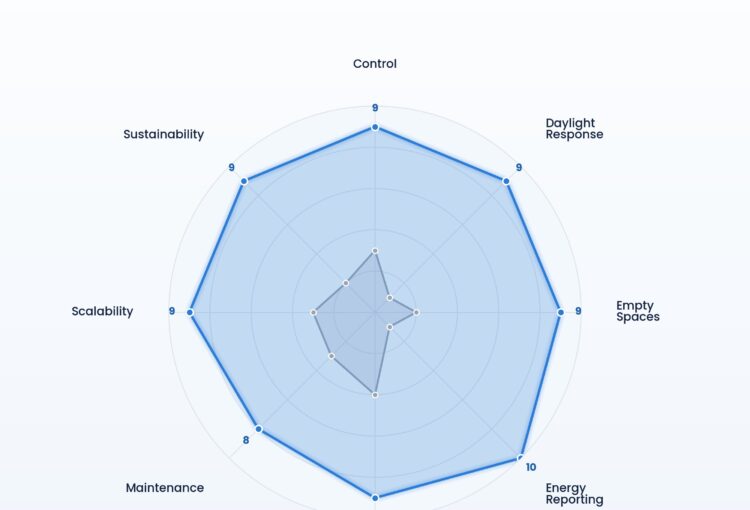
The simplest way to grasp the upgrade is a direct comparison. Traditional lighting is manual and reactive. Smart lighting is automated and proactive. The gap looks small in a single room and enormous across a whole building. With traditional switching, a light is either fully on or fully off, and it depends entirely on a person to manage it. Nobody dims the lobby when the morning sun floods in.
Nobody walks the third floor at midnight to switch off empty offices. The energy simply drains away, hour after hour, unnoticed on the bill. A smart system removes the human variable. It dims, switches, and schedules on its own, and it never forgets. That consistency is where the savings come from, because the waste in most buildings is not dramatic, it is constant and small and endless.
Factor | Traditional Lighting | Smart Lighting Control |
|---|---|---|
Control | Manual switch, on or off | Automated by sensors and schedules |
Daylight response | None | Dims automatically to match natural light |
Empty spaces | Lights are often left on | Switched off or dimmed automatically |
Energy reporting | None | Detailed, room-by-room data |
Comfort | Fixed brightness | Tunable scenes and presets |
Maintenance | Faults found by chance | Dashboard flags failures early |
Scalability | Rewiring needed | Easily expanded, especially wireless |
Sustainability | Minimal support | Supports green certification |
The case for smart lighting is unusually strong in the Kingdom, because local conditions amplify every benefit. Start with how much energy lighting uses. In the United States, lighting accounts for roughly 17 percent of the electricity used in commercial buildings, according to the U.S. Energy Information Administration.
Globally, the International Energy Agency puts lighting at close to 19 percent of total electricity demand. In office and retail spaces, the share runs higher still.
Now add the Saudi climate. Cooling dominates energy use here, like almost nowhere else. Research on residential energy in Jeddah found that virtually every household relies on air conditioning, often for most of the day, which pushes cooling to the majority of building electricity use, as documented in this peer-reviewed study.
Lighting adds to that load twice over, because older fittings also generate heat that the air conditioning must then remove. Efficient, well-managed lighting cuts both the lighting bill and part of the cooling bill at the same time.
The country has already proven how much efficient lighting can deliver. The Saudi Energy Efficiency Center, part of the Ministry of Energy, reports that energy efficiency standards drove a dramatic reduction in home and street lighting consumption, alongside tighter rules in the Saudi Building Code and SASO product standards. Lighting control takes that momentum further by managing the remaining lighting.
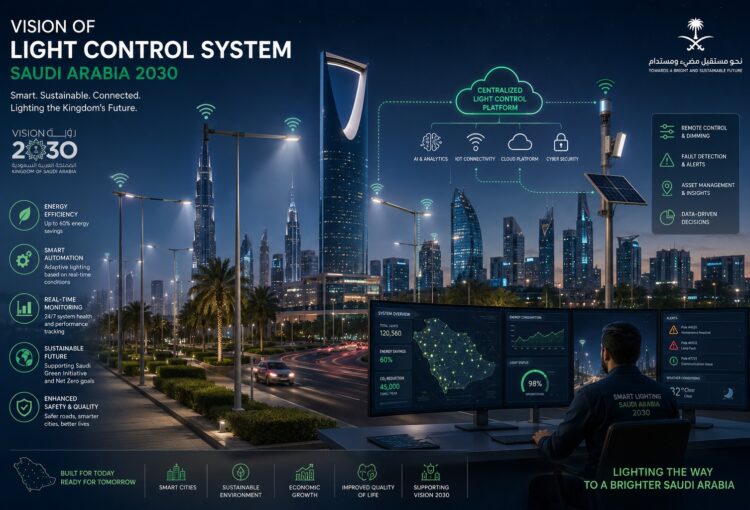
Vision 2030 places sustainability and smart infrastructure at the heart of national development. Every new tower, hotel, mall, and mega-project is expected to perform efficiently, and lighting control is one of the easiest and fastest ways to hit those targets. It supports green building certification, lowers operating costs, and aligns a property with the direction the entire Kingdom is moving.
Wondering how this applies to your specific building? Talk to a specialist through Aala Tech’s control and automation team.
Choosing the right setup usually comes down to matching the technology to the building. Here are the pieces that matter.
These detect whether a space is in use and switch or dim lighting accordingly. Presence sensors are sensitive enough to notice a stationary person, so lights never cut out on someone sitting still. They are among the highest-impact, lowest-cost features available.
Daylight sensors measure available natural light and dim the fittings to maintain a steady level. Given how much sunshine the Kingdom enjoys, this single strategy delivers exceptional savings, especially in glazed lobbies, atriums, and perimeter offices.
Smooth dimming and preset scenes let one tap reconfigure a whole space, from a bright work setting to a soft evening mood. This is where comfort and energy savings meet.
Scheduling aligns lighting with how a building is actually used, ramping up before people arrive and easing off when they leave, with manual override always available.
DALI is the international digital standard for granular, addressable control, ideal for large commercial buildings that need fault reporting room by room. KNX is a building-wide automation standard that unifies lighting with cooling, blinds, and more. Wireless options suit retrofits because they avoid tearing into walls and make upgrades far less disruptive.
Almost any building gains from lighting control, but some see faster returns than others. The biggest winners are spaces with many rooms or long operating hours, because that is exactly where lighting waste piles up.
Hotels and resorts use it for both guest comfort and back-of-house savings, often alongside a guest room management system. Offices and towers benefit from daylight harvesting on glazed facades and occupancy control in meeting rooms.
Malls and retail rely on scenes and schedules to shape the shopper experience while controlling the high cost of lighting vast spaces. Hospitals gain from reliable, tunable lighting that supports patients and staff around the clock.
Warehouses and industrial facilities save dramatically by lighting only the active aisles, only when needed. And villas and smart homes enjoy convenience, security lighting, and lower bills. The common thread is simple: the more hours a building runs and the more spaces it contains, the more there is to save.
This is the question every owner asks, and it deserves an honest answer. The cost of a lighting control system depends on the size of the building, the number of fittings, and the features you choose, so a small office and a large hotel are not remotely comparable.
A modest setup for a single floor is an easy investment, while a full system across a tower or campus is a larger project that is usually phased.
What matters more than the sticker price is how the payback works. The return comes from several savings stacked together, not from any single line item. Lower energy bills are the headline, but the system also extends the life of your fittings by running them gently, reduces maintenance through early fault detection, and trims a slice of the cooling load because efficient lighting produces less heat.
For most commercial buildings, those combined savings mean the system pays for itself well within a few years, after which the savings become pure return for the rest of its life. The exact figure depends on your tariff, your hours of operation, and how wasteful the current setup is, which is why a proper site survey and an energy assessment matter before anyone quotes a number.
There is also a hidden cost in waiting. Every month an inefficient building runs, it spends money it did not need to, and in a market where new, efficient properties keep opening, older buildings that delay tend to fall behind on both running costs and tenant expectations. The cheapest moment to act is almost always now, and the most expensive choice is usually to do nothing.
If you are building from scratch, installing controls during construction is cleaner and cheaper, because the wiring and design account for it from day one.
If your building is already finished and occupied, wireless options make a retrofit far less disruptive than people expect, letting you upgrade floor by floor while the building keeps running. Either way, the first step is the same: a survey to understand how the building is used and where the waste is hiding.
Demand and building types differ across the Kingdom, and the right approach reflects that.
The capital is the fastest-moving market, with new towers, offices, and developments competing hard. Lighting control suppliers in Riyadh help these large buildings stay efficient without sacrificing the bright, welcoming feel that premium tenants expect. Because projects here follow strict standards, owners tend to vet several lighting control companies in Riyadh and work with a proven lighting control supplier in Riyadh who understands local codes and timelines.
Jeddah blends commercial districts with hospitality and homes along a humid coast that puts heavy pressure on cooling. Lighting control suppliers in Jeddah suit this mix, adapting from glass-fronted offices flooded with daylight to hotels that need a different mood in every space. Many owners choose a lighting control supplier in Jeddah with real coastal experience, and compare lighting control companies in Jeddah on service and reliability rather than price alone.
In the Eastern Province, Dammam serves as a steady base of corporate, commercial, and industrial buildings tied to the energy and logistics sectors. Lighting control solutions in Dammam keep these spaces efficient around the clock, lighting only the areas in use. The region’s intense heat makes a dependable lighting control supplier in Dammam worth far more than the cheapest quote, which is why operators weigh lighting control companies in Dammam on long-term support.
Madinah is shaped by the enormous, often seasonal flow of visitors its hotels and public buildings welcome. Lighting control solutions in Madinah help large properties stay comfortable and efficient through sharp swings between busy and quiet periods. With so much depending on smooth operation at peak times, owners look for a lighting control supplier in Madinah who can support them quickly and shortlist established lighting control companies in Madinah for the reliability these high-traffic buildings demand.
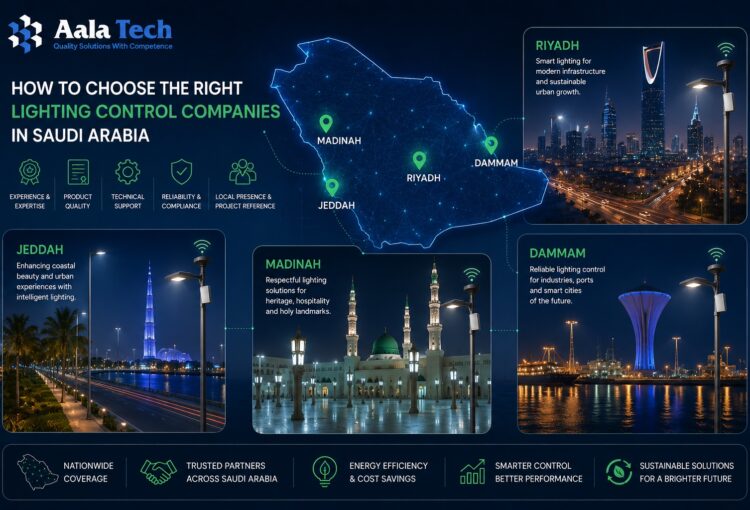
The number of lighting control companies in Saudi Arabia has grown quickly, which is good for choice but harder for decision-making. The technology matters less than the team behind it.
A strong lighting control supplier in Saudi Arabia will survey your building first, learn how it is used, and design a setup that genuinely fits, rather than selling everyone the same package. Check that the system can scale and integrate with your other building systems. Ask about certified technology partners, since hardware quality decides reliability for years.
Confirm there is proper local support, because a system that runs every day needs a team that responds quickly. And choose a partner who stays involved long after installation. Many properties also pair lighting with a wider HVAC control system or, in hotels, a guest room management system for a single, coordinated platform.
