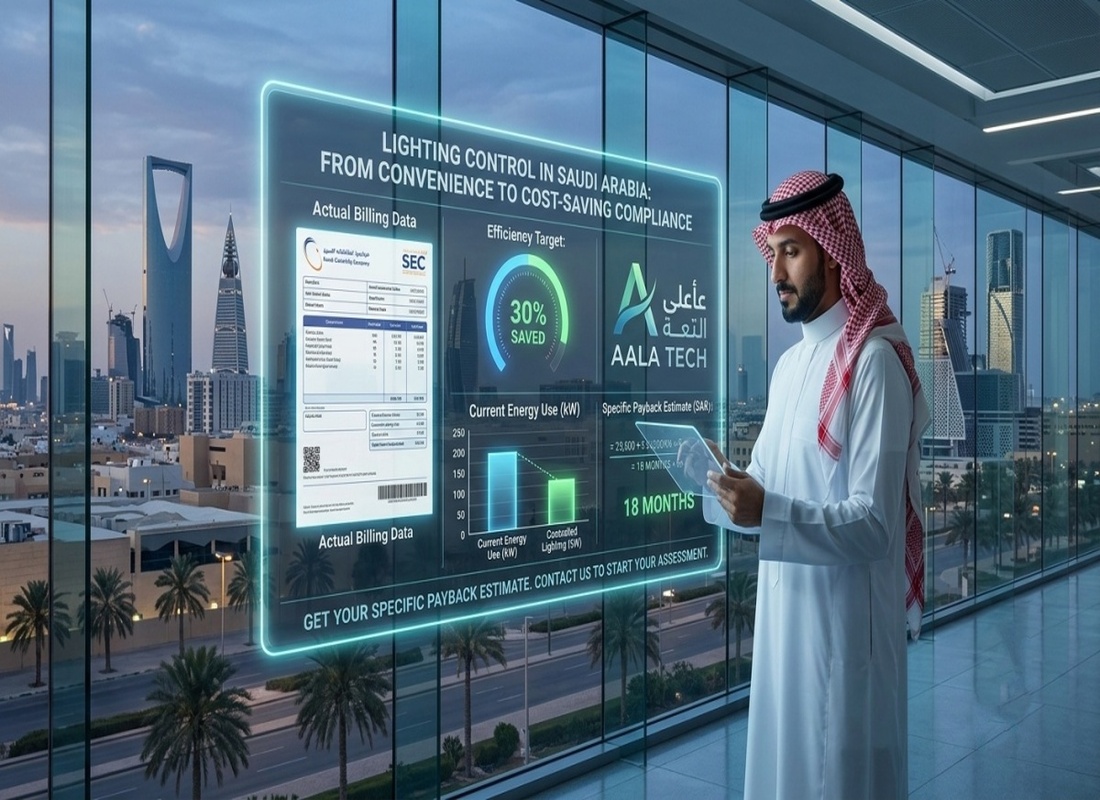
Every facility manager in the Kingdom has heard the pitch: install smart lighting control and cut your electricity bill. Few have seen the actual math. This guide gives you real

 English
 English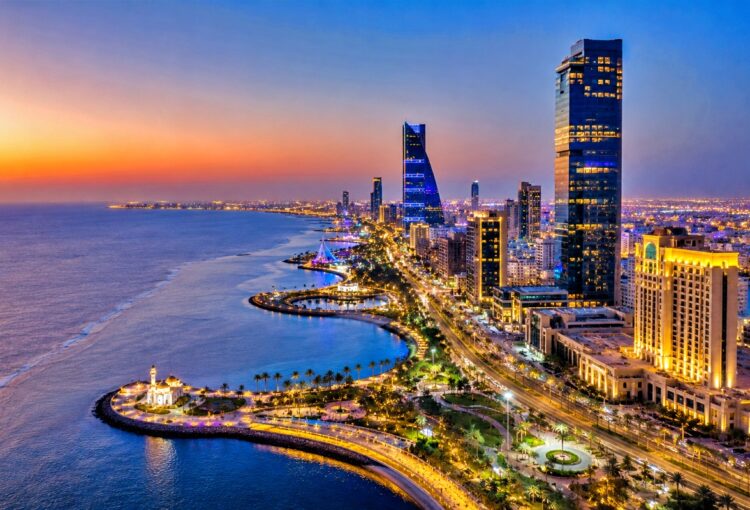
Saudi Arabia’s hotel industry is in the midst of its most competitive era. Jeddah alone has 63 hotel development projects representing 14,358 new rooms in its construction pipeline as of Q4 2025 – a record high for the city, according to Lodging Econometrics. Madinah, meanwhile, is preparing for the surge toward 30 million annual Umrah pilgrims by 2030, with massive new hotel megaprojects transforming the city’s hospitality landscape. In both cities, the question for hotel operators is the same: when supply is booming and competition is intensifying, how do you make your hotel the one guests remember, return to, and recommend?
The answer lies increasingly in smart hotel technology. Specifically, in how a GRMS System Solutions (GRMS) transforms an ordinary hotel stay into a seamlessly personalized, effortlessly comfortable experience – and transforms a hotel’s back-of-house from a cost center into an operationally intelligent, energy-efficient machine. This article explores how hotels in Jeddah and Madinah are using intelligent room automation to compete, differentiate, and win in two of Saudi Arabia’s most dynamic hospitality markets.
For most of the past decade, Saudi Arabia’s hospitality market was supply-constrained. Demand from religious tourism, corporate travel, and government events consistently outstripped available rooms, and hotels could fill beds without needing to differentiate, particularly hard on guest experience. That dynamic is changing rapidly.
According to the Q4 2025 Middle East Hotel Construction Pipeline report from Lodging Econometrics, the Middle East’s pipeline reached a record 710 projects and 176,402 rooms – with Saudi Arabia leading the region with 342 projects and 92,187 rooms. In Jeddah specifically, 63 projects representing 14,358 rooms are in development. In Makkah (which draws guests who also stay in Jeddah), 35 projects adding 22,829 rooms are underway. This is a fundamental shift from scarcity to abundance – and it changes everything for hotel operators.
In an oversupplied market, the differentiators that matter most are the ones guests feel immediately: How comfortable is my room? How easy is it to control my environment? Does this hotel remember my preferences? How quickly did staff respond to my request? Smart hotel room technology – a guest room management system – answers all four of these questions decisively in your favor.
Three forces are converging to make smart room technology a strategic necessity, not a nice-to-have, for hotels in Jeddah and Madinah:
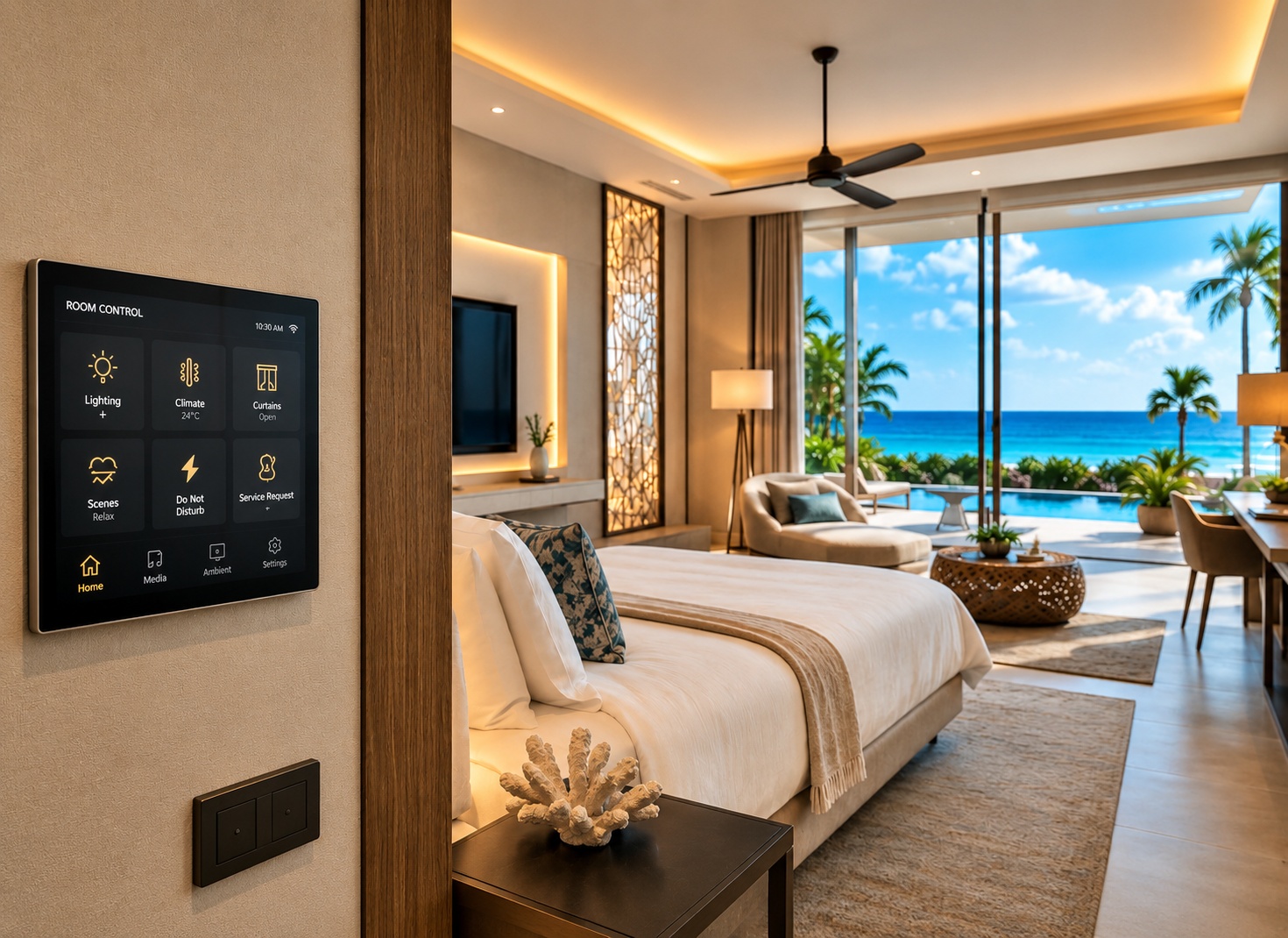
A guest room management system is the intelligent technology layer that connects and automates every device and system within a hotel room – lighting, air conditioning, curtains, door locks, entertainment, and service request indicators – and links them to a central management platform accessible to both guests and hotel operations staff.
Unlike a property management system (PMS), which manages reservations and front desk workflows, or a building management system (BMS), which manages building-wide infrastructure, a GRMS operates at the individual room level. It is the technology that makes a room ‘smart’ – responsive to the guest, efficient without attention, and transparent to the staff managing it.
Jeddah is undergoing one of the most dramatic hospitality transformations of any city in the Middle East. The Red Sea coast is attracting a new category of international leisure tourist – affluent, experience-driven, digitally sophisticated – alongside the city’s established base of business travelers and domestic tourists. Hotels serving this audience are competing not just against each other but against the world’s finest properties. And the guests they are attracting have stayed at the Four Seasons, the Raffles, the Atlantis. They know exactly what a smart hotel room feels like.
Four Seasons Hotel and Residences Jeddah at the Corniche is in development. Raffles Jeddah has opened on the North Corniche. Atlantis Jeddah – featuring 800 rooms and suites – is in the pipeline. JW Marriott Jeddah, with 280 rooms on the Corniche, is advancing. These are the competitive reference points that mid-tier and independent Jeddah hotels must now navigate. The technology gap between a smart, GRMS-equipped room and an unautomated one has never been more visible – or more commercially consequential.
| Key data point: Jeddah had 63 hotel projects (14,358 rooms) in its construction pipeline at Q4 2025 – a record high for the city. Hotels opening into this competitive environment will face immediate pricing pressure. GRMS is one of the clearest ways to justify premium rates and earn loyal repeat guests. (Source: Lodging Econometrics Q4 2025/ Lodging Econometrics Q2 2025) |
Aala Tech provides expert GRMS System Solutions in Jeddah, supporting hotels across the city’s leisure corridor, business district, and Corniche waterfront. Our local team delivers installation, commissioning, and ongoing maintenance, giving Jeddah hotel operators a responsive partner with deep knowledge of the city’s hospitality infrastructure and regulatory environment.
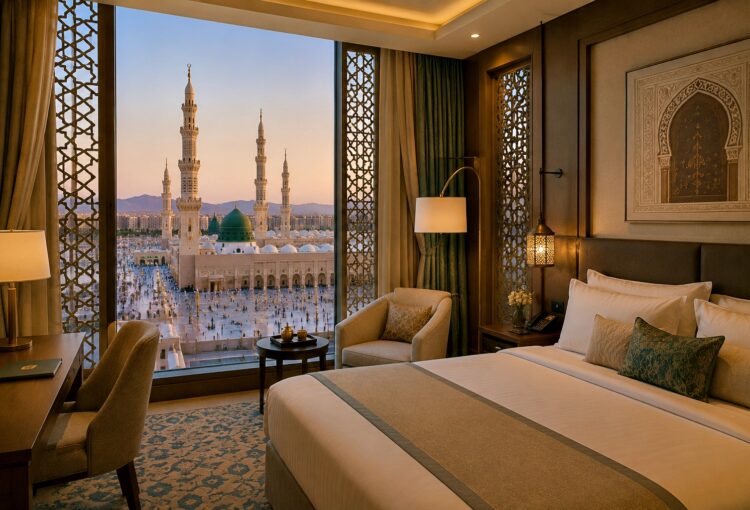
Madinah presents a completely different hospitality challenge from Jeddah, and one that smart hotel technology is uniquely equipped to address. The city hosts millions of Umrah pilgrims year-round and up to 1.8 million Hajj pilgrims during the annual pilgrimage season, serving guests from over 180 countries who speak dozens of languages, have vastly different expectations of comfort and service, and arrive in extraordinary volumes during peak periods before going quiet in off-peak weeks.
Hilton signed its first Tapestry Collection by Hilton property in Saudi Arabia in Madinah in July 2025. The Rua Al Madinah megaproject – spanning 1.5 million square meters adjacent to the Prophet’s Mosque will deliver thousands of new hotel rooms. The Four Seasons Hotel Madinah, steps from Al-Masjid an-Nabawi, is in development. These are world-class properties entering one of the world’s most demanding hospitality markets. The Madinah hotel operator who invests in smart room technology now will be positioned to serve this market with a quality and consistency that builds lasting loyalty among the world’s Muslim travellers.
| Market insight: Saudi Arabia is targeting 30 million annual Umrah pilgrims by 2030, up from approximately 16.9 million international Umrah pilgrims in 2024. This growth creates intense demand management pressure in Madinah – a challenge that GRMS is specifically designed to address through occupancy-based automation and centralized room control. (Source: Saudi Ministry of Tourism / Skift Research) |
Madinah’s hospitality market has characteristics that make GRMS not just useful but operationally essential:
During Hajj and peak Umrah seasons, Madinah hotels operate at or near 100% occupancy for weeks at a time, with rapid guest turnover as pilgrims move between cities on tight itineraries. In off-peak periods, occupancy can drop significantly, with rooms sitting empty for extended periods. A GRMS manages both extremes intelligently: during peak periods, automated housekeeping signals and real-time room status eliminate the coordination friction that would otherwise overwhelm staff. During off-peak periods, occupancy-based HVAC setbacks and automated lighting controls prevent energy waste across hundreds of unoccupied rooms, protecting hotel profitability when revenue is lower.
Pilgrims to Madinah come from Indonesia, Pakistan, Turkey, Egypt, Morocco, Nigeria, Malaysia, the United Kingdom, and dozens of other countries. They speak Arabic, Urdu, Turkish, Bahasa, French, and more. A smart room management system with multilingual guest interface support – available on modern GRMS platforms – removes the language barrier from in-room control. Instead of deciphering labels on switches they may not recognize, guests interact with intuitive icons and touch interfaces that work regardless of language. This seemingly small detail dramatically improves the guest experience for international pilgrims and reduces service calls to the front desk.
Many Umrah pilgrims return to Madinah multiple times – annually or even more frequently. For Madinah hotels, converting first-time pilgrims into returning guests is an enormous revenue opportunity. A GRMS with guest preference storage makes this possible: returning guests arrive to find their preferred temperature already set, their lighting preferences activated, and their room environment configured exactly as they like it – without them having to say a word. This level of recognition transforms a functional pilgrimage stop into an emotionally resonant hospitality experience. It is the difference between a hotel that pilgrims choose once and one they seek out on every visit.
During the most intense pilgrimage periods, Madinah hotel staff are stretched thin – managing thousands of simultaneous guests, thousands of service requests, and hundreds of room transitions per day. A GRMS reduces this pressure substantially. Housekeeping supervisors manage room status from a dashboard rather than physically patrolling corridors. Engineering staff receive automatic maintenance alerts rather than waiting for guest complaints. Front desk teams spend less time on coordination calls and more time on the personalized service that creates memorable stays. The net effect is a hotel that can serve peak demand without proportional increases in staffing costs.
Aala Tech’s GRMS System Solutions in Madinah are designed with the specific operational demands of the city’s pilgrimage hotel market in mind. Our GRMS installations are configured for multilingual interface support, high-volume occupancy cycles, and the integration with pilgrimage-season demand management workflows that Madinah’s unique hospitality context requires.
| Is your Jeddah or Madinah hotel ready for smart room technology? Aala Tech offers a free property consultation – we’ll assess your infrastructure, identify the right GRMS platform for your property, and build the business case for your investment. Contact our team today. Source (U.S. Department of Energy / ENERGY STAR) |
Not all smart room technology is created equal. The features that actually move the needle on guest satisfaction, operational efficiency, and energy savings require a purpose-built GRMS – not a generic smart home system adapted for hospitality. Here are the key capabilities that define a competitive hotel room automation system.
The most commercially impactful GRMS feature is occupancy-based climate management. Passive infrared (PIR) and microwave occupancy sensors detect whether a room is occupied and automatically adjust HVAC setpoints when guests are absent. The U.S. Department of Energy reports that the average hotel room is unoccupied for approximately 12 hours per day, and that unoccupied rooms consume 60-80% of the energy they use when occupied. By automatically shifting HVAC to a setback mode during guest absences, a GRMS captures these savings without any guest discomfort, because the system resumes full comfort operation the moment the guest returns, before they notice any temperature difference.
For Jeddah’s luxury leisure market, where guests may be away from the room for long daytime beach and activity hours, this translates to substantial daily energy savings. For Madinah’s pilgrimage hotels, where guests often spend many hours at the mosque and return to sleep in shifts, the savings compound across hundreds of rooms.
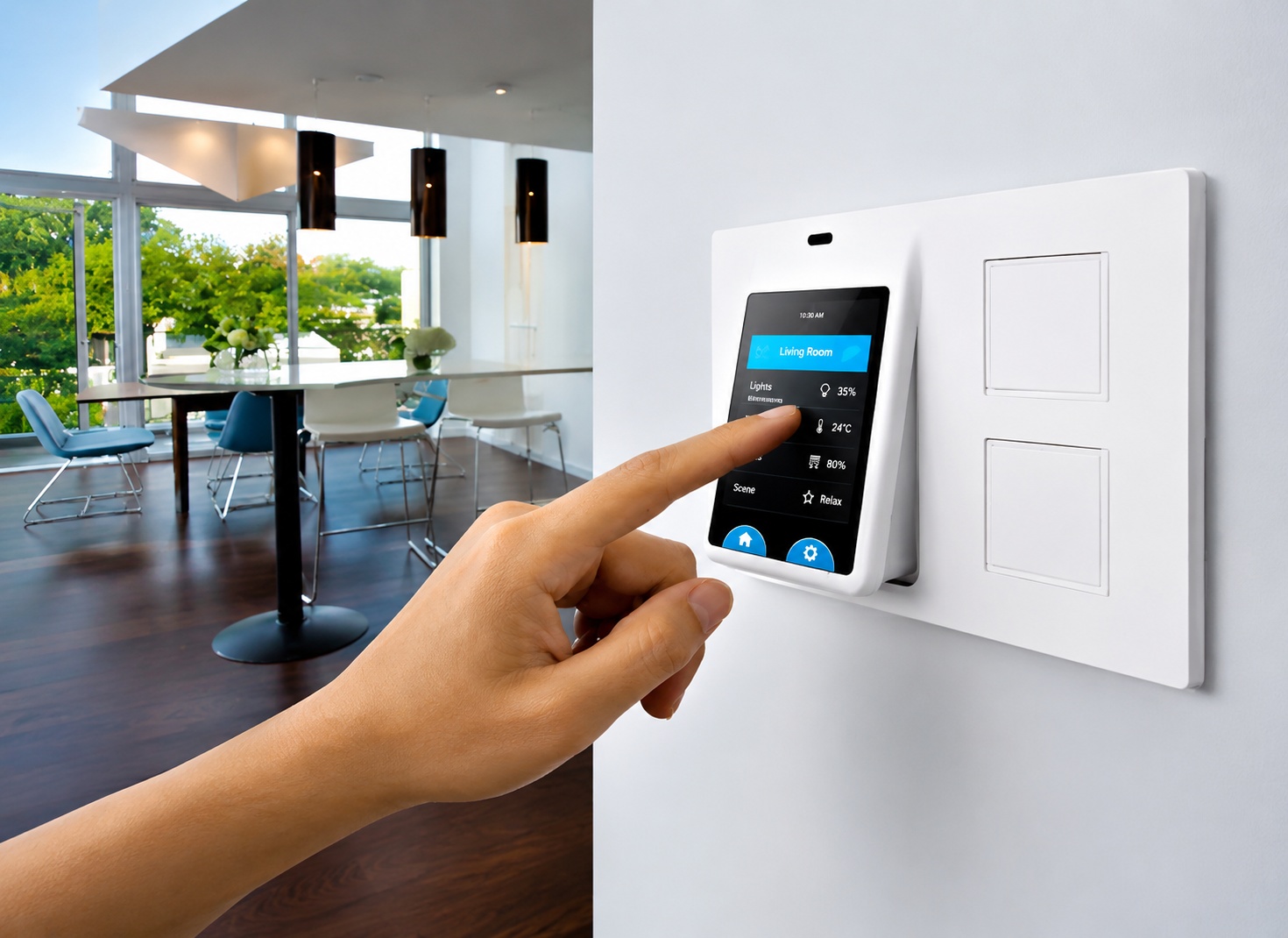
Modern GRMS lighting control goes far beyond simple on/off switching. Guests can select pre-configured scenes – ‘Energize’ for bright morning light, ‘Relax’ for warm ambient evening lighting, ‘Cinema’ for darkened entertainment viewing, ‘Sleep’ for full blackout – with a single tap. Each scene controls every light fixture in the room simultaneously, including bedside lamps, reading lights, bathroom vanity lighting, and accent fixtures. Occupancy-triggered lighting control turns off all lights when the room is empty and restores the guest’s last scene when they return.
For Madinah hotels, where guests may wake for Fajr prayer before dawn and require precise, non-disruptive lighting at unusual hours, the ability to pre-set quiet wake-up lighting scenes is a genuinely meaningful feature. For Jeddah’s luxury market, sophisticated lighting control is a fundamental component of the premium-feel room experience that justifies higher ADR.
Privacy and light control are among the most-requested in-room features in both luxury leisure and religious tourism markets. GRMS-controlled motorized curtains allow guests to adjust window coverings from anywhere in the room – or pre-schedule them (open at a specific time each morning, close for privacy at night). For rooms with Red Sea views in Jeddah, automated shading that adjusts to sunlight intensity enhances both the view experience and thermal comfort. For Madinah rooms oriented toward Al-Masjid an-Nabawi, precise privacy control is both practically and culturally valued by guests.
A full GRMS integrates with the hotel’s electronic door lock system, creating a unified access control integration and occupancy management platform. When a guest inserts their keycard into the room’s energy controller or taps their mobile credential at the door, the GRMS registers the room as occupied and activates all services. This integration enables mobile key support, where a guest’s smartphone serves as both room key and room controller, eliminating the plastic keycard and enabling contactless check-in workflows that are increasingly preferred by digitally native guests.
For Jeddah’s international leisure and business traveler segment, mobile key integration aligns with the frictionless digital experience these guests expect. For Madinah’s multilingual pilgrim guests, a simple, universal mobile credential removes language barriers at the point of room entry.
GRMS corridor panels communicate room status to housekeeping staff in real time – eliminating the need for physical room checks or phone coordination. The ‘Do Not Disturb’ and ‘Make Up Room’ status signals are visible from the corridor panel, color-coded for instant recognition. Housekeeping supervisors can view all room statuses simultaneously on the central dashboard, plan cleaning sequences by checkout order, and update room readiness status from a mobile device – all without entering a single room unnecessarily. During the high-turnover periods that characterize both Jeddah’s leisure market and Madinah’s peak pilgrimage seasons, this operational efficiency is not a convenience but a necessity.
Smart hotel room technology delivers two categories of financial return: direct energy savings and operational efficiency gains. Both are measurable, both are material, and together they make the GRMS investment case compelling for virtually any Saudi Arabia hotel with 80+ rooms.
HVAC control systems consume 40-50% of a hotel’s total electricity budget. Lighting adds another significant share. Together, these represent the most substantial controllable cost in hotel operations – and both are directly managed by a GRMS. Industry benchmarks consistently show energy savings of 25-35% for hotels implementing GRMS-driven automation. For a property spending SAR 2 million annually on energy, this represents SAR 500,000-700,000 in annual savings. The International Energy Agency (IEA) specifically attributes 20-30% reductions in HVAC energy consumption to smart climate controls, and Verdant/Copeland research shows HVAC runtime reductions of up to 45% through occupancy-based setbacks.
For Jeddah’s hotels, where the combination of intense Red Sea summer heat and luxury-tier guest comfort expectations drives significant HVAC loads, these savings are particularly meaningful. For Madinah’s properties, where energy costs during peak pilgrimage occupancy are highest, and energy waste during off-peak vacancy is most prevalent, the GRMS provides precision management at both extremes.
| Scenario | Hotel Size | Annual Energy Spend | GRMS Saving (30%) | Payback Period |
| Jeddah Mid-Scale Hotel | 120 rooms | SAR 1,200,000 | SAR 360,000/year | ~18-24 months |
| Jeddah Luxury Hotel | 200 rooms | SAR 2,500,000 | SAR 750,000/year | ~12-16 months |
| Madinah Pilgrimage Hotel | 300 rooms | SAR 3,000,000 | SAR 900,000/year | ~10-14 months |
| Madinah Boutique Property | 80 rooms | SAR 800,000 | SAR 240,000/year | ~20-26 months |

Note: These are illustrative estimates based on industry benchmark savings of 25-35%. Actual savings vary by property type, infrastructure, occupancy patterns, and existing efficiency measures. Aala Tech provides accurate project-specific ROI modelling during the free property assessment process.
Beyond energy, GRMS delivers measurable efficiency gains across housekeeping, engineering, and front desk operations. Industry research from VDA Telkonet’s 2025 Tech Report – based on a survey of 500 hospitality professionals – confirms that hotels consistently identify operational efficiency as the second most important driver of GRMS adoption, after energy savings. Specific efficiency gains include:
Aala Tech is Saudi Arabia’s leading building control and automation systems specialist, delivering intelligent GRMS solutions to the Kingdom’s most prestigious hospitality brands – including Marriott, Hilton, InterContinental, Radisson Blu, and Oberoi. Our GRMS portfolio is built on two of the hospitality industry’s most proven global platforms.
Honeywell Inncom has been the preferred GRMS platform for the world’s leading luxury hotel brands since 1986, deployed across more than 50 countries. The Inncom E7 controller – operating on the PC-502.RF protocol – delivers the reliability, integration depth, and feature completeness that global hotel brands require. For Jeddah’s luxury leisure properties and Madinah’s five-star pilgrimage hotels, Honeywell Inncom provides the industry-credentialed platform that satisfies brand compliance requirements and delivers a proven guest experience.
Orbita GRMS, deployed in over 120 countries since 2004, provides a highly adaptable platform operating on RS485, Zigbee, and proprietary RF protocols with the Room Control Unit (RCU) at its core. Orbita’s strength lies in its scalability and deployment flexibility – making it the ideal platform for Jeddah’s range of new-build developments (from boutique coastal properties to large resort complexes) and for Madinah’s diverse mix of pilgrimage hotels at varying star ratings and room counts.
What distinguishes Aala Tech is not just the quality of the GRMS platforms we supply – it is the depth of local expertise and support we wrap around them. Our engineers understand Saudi Arabia’s MEP standards, building codes, and hospitality brand compliance requirements. Our project management teams have delivered GRMS installations in complex, operational hospitality environments without disrupting guests. Our support teams provide rapid on-site response for Jeddah and Madinah properties, because for a hotel in peak season, every hour of system downtime has a direct cost.
Aala Tech’s GRMS solutions also integrate natively with the full building automation ecosystem – including the building management system (BMS), lighting control infrastructure, HVAC control systems, access control platforms, and CCTV surveillance systems – that Aala Tech installs and maintains across Saudi Arabia. This single-partner, fully integrated approach reduces the technical risk and operational complexity of deploying smart hotel technology in your property.
Saudi Arabia’s hospitality market is entering a period of unprecedented supply growth and competition. Jeddah’s record pipeline of 14,358 new hotel rooms and Madinah’s ambitions for 30 million annual pilgrims by 2030 are not just market opportunities – they are signals that the hotels that invest in differentiation today will be the ones that lead their markets tomorrow.
Smart hotel room technology, a guest room management system, is that differentiator. It delivers the personalized in-room experience that international guests now expect as standard, the operational efficiency that hotel operators need to run competitive margins in a more crowded market, and the energy savings that protect profitability when room rate growth is constrained by supply. For Jeddah’s luxury and leisure market, it is the technology that earns premium reviews and premium rates. For Madinah’s pilgrimage market, it is the technology that converts first-time visitors into loyal returning guests and manages peak-season operations with a precision that manual systems simply cannot match.
Aala Tech is ready to help your hotel make this investment confidently. Our free property consultation covers your infrastructure, your brand requirements, your budget parameters, and your expected ROI – giving you the information you need to make the right decision for your property. Whether you operate a boutique Jeddah Corniche hotel or a large-scale Madinah pilgrimage property, Aala Tech’s smart lighting control hotel technology solutions are built for your market and backed by our track record with Saudi Arabia’s most trusted hotel brands.
| Take the first step toward smarter hotel operations. Contact Aala Tech today to schedule your free GRMS property assessment for your Jeddah or Madinah hotel. Our team will evaluate your infrastructure, recommend the right platform, and show you exactly what your ROI looks like. No commitment required. Source (Skift Research / Saudi MoT) |
