Lighting Control ROI in Saudi Arabia: What It Really Costs, What It Really Saves (2026 Guide)
Every facility manager in the Kingdom has heard the pitch: install smart lighting control and cut your electricity bill. Few have seen the actual math. This guide gives you real numbers, Saudi tariffs, real payback timelines, and how lighting control now ties directly into Vision 2030 compliance, so you can build a business case instead of taking someone’s word for it.
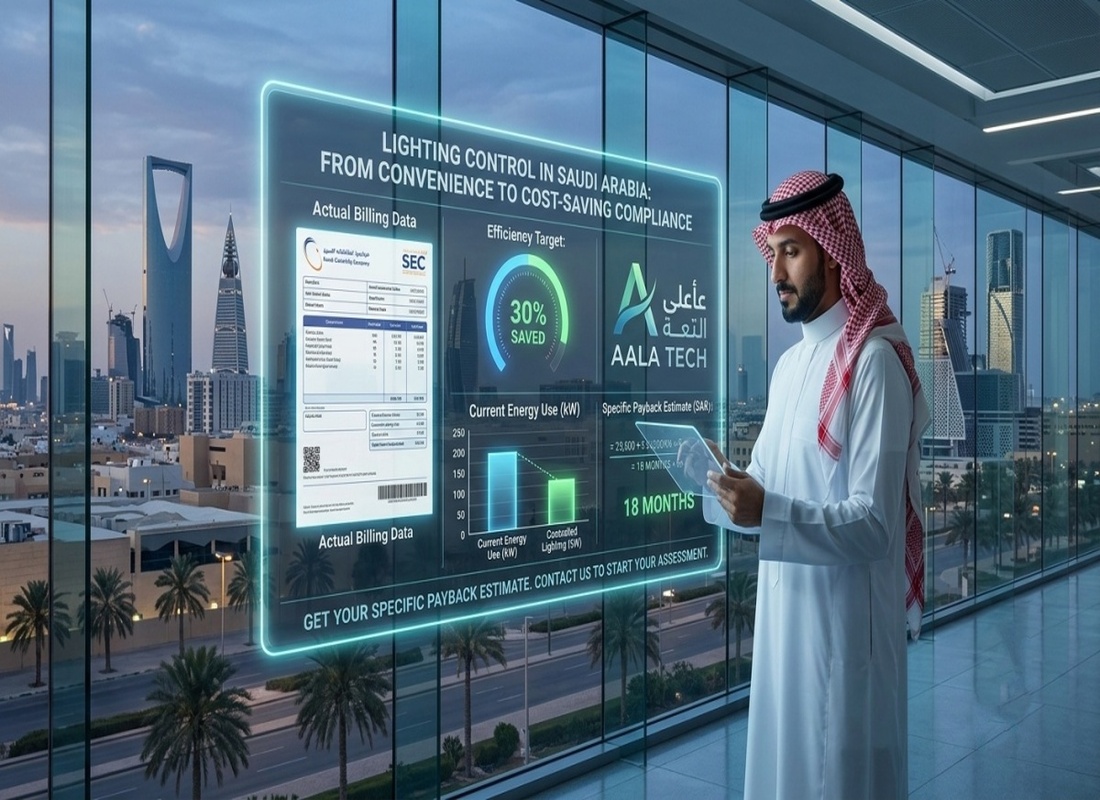
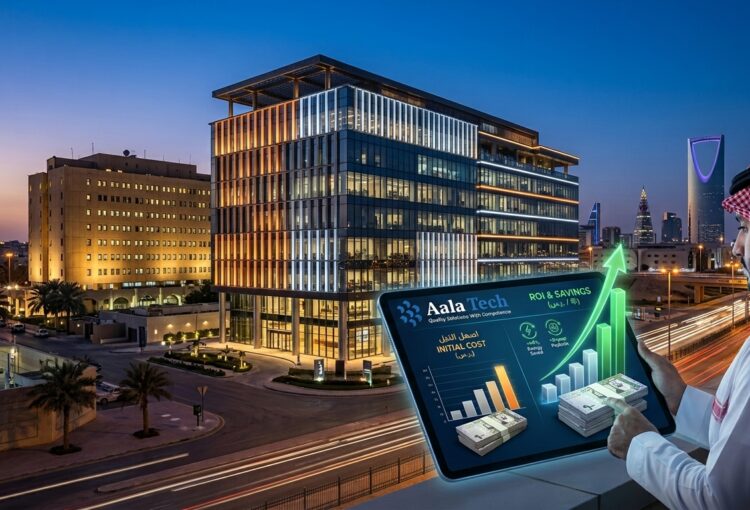
Buildings account for roughly 80% of all electricity consumed in Saudi Arabia, according to the Saudi Energy Efficiency Center. Lighting is one of the few loads inside that number you can cut without touching comfort, safety, or guest experience. The question isn’t whether lighting control saves money. It’s how fast it pays for itself in your building, under your tariff, with your usage pattern.
Why Lighting Control ROI Matters More in 2026 Than It Did Five Years Ago
Three things changed the math recently.
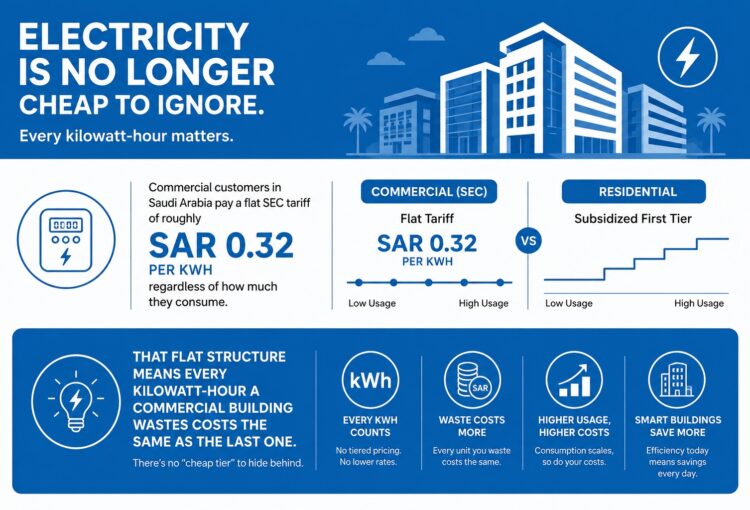
Electricity is no longer cheap to ignore. Commercial customers in Saudi Arabia pay a flat SEC tariff of roughly SAR 0.32 per kWh, regardless of how much they consume, unlike residential accounts, which get a subsidized first tier. That flat structure means every kilowatt-hour a commercial building wastes costs the same as the last one. There’s no “cheap tier” to hide behind.
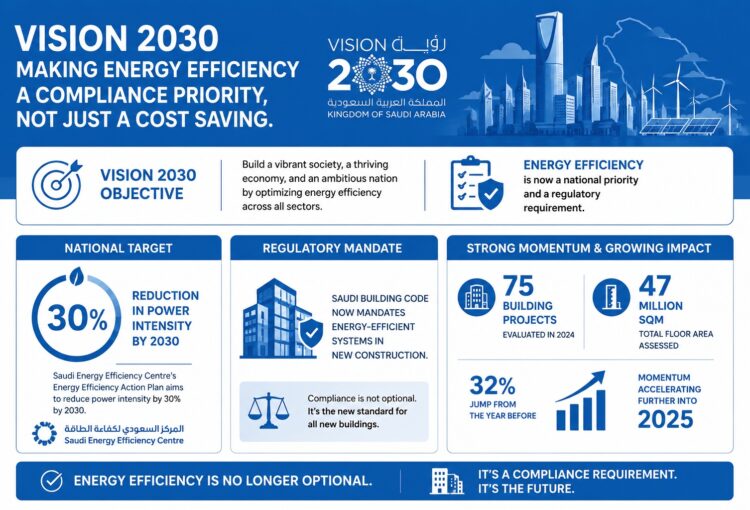
Vision 2030 turned energy efficiency into a compliance issue, not just a cost-saving idea. The Saudi Energy Efficiency Centre’s Energy Efficiency Action Plan targets a 30% reduction in power intensity by 2030, and the Saudi Building Code now mandates energy-efficient systems in new construction. In 2024 alone, 75 building projects covering 47 million square meters were evaluated under the Building Sustainability Assessment System, a 32% jump from the year before, with momentum accelerating further into 2025.
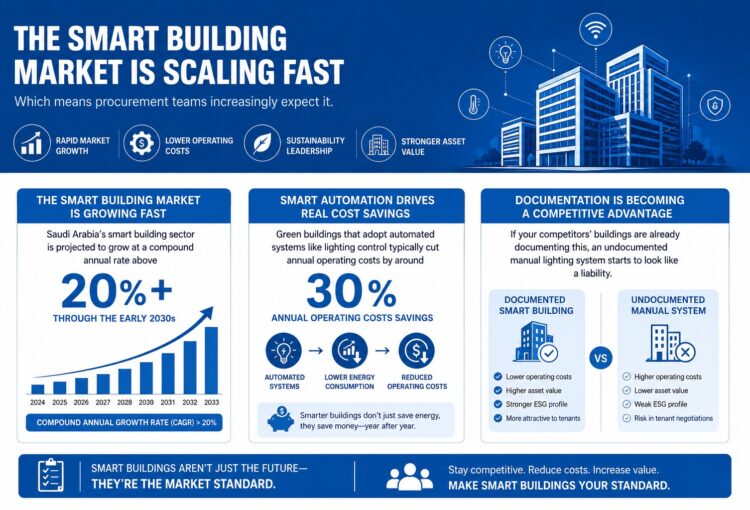
The smart building market is scaling fast, which means procurement teams increasingly expect it. Saudi Arabia’s smart building sector is projected to grow at a compound annual rate above 20% through the early 2030s, and green buildings that adopt automated systems like lighting control typically cut annual operating costs by around 30%. If your competitors’ buildings are already documenting this, an undocumented manual lighting system starts to look like a liability during tenant negotiations or asset valuations.
The Real Cost of "Just Flipping a Switch"
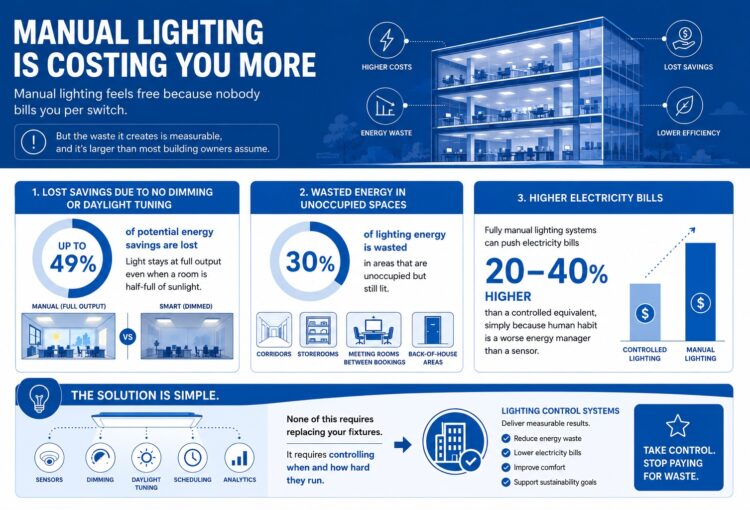
Manual lighting feels free because nobody bills you per switch. But the waste it creates is measurable, and it’s larger than most building owners assume.
- Buildings without dimming or daylight-tuning strategies lose up to 49% of potential energy savings, light stays at full output even when a room is half-full of sunlight.
- 30% of lighting energy is wasted in areas that are unoccupied but still lit, corridors, storerooms, meeting rooms between bookings, back-of-house areas.
- Fully manual lighting systems can push electricity bills 20–40% higher than a controlled equivalent, simply because human habit is a worse energy manager than a sensor.
None of this requires replacing your fixtures. It requires controlling when and how hard they run, which is exactly what a lighting control system does.
What Actually Drives the Savings (Not Just "Smart" Marketing)
Lighting control ROI doesn’t come from one clever feature. It comes from stacking four mechanisms, each attacking a different kind of waste:
Occupancy and vacancy sensors turn lights off in empty spaces automatically, such as corridors, restrooms, storage, and meeting rooms. This is usually the single biggest saving in commercial buildings because it eliminates the most common waste source: lights left on by habit.
Daylight harvesting and dimming reduce artificial light output when sunlight is already doing the job, particularly along perimeter zones and atriums common in Saudi commercial architecture. Riyadh, Dammam, and Jeddah average well over 3,000 hours of sunshine a year. Daylight harvesting has more raw material to work with here than in most markets Western lighting-control case studies are based on.
Scheduling matches lighting to actual operating hours instead of a caretaker’s memory, retail closing times, office hours, prayer-time adjustments for mosques, or back-of-house schedules in hotels.
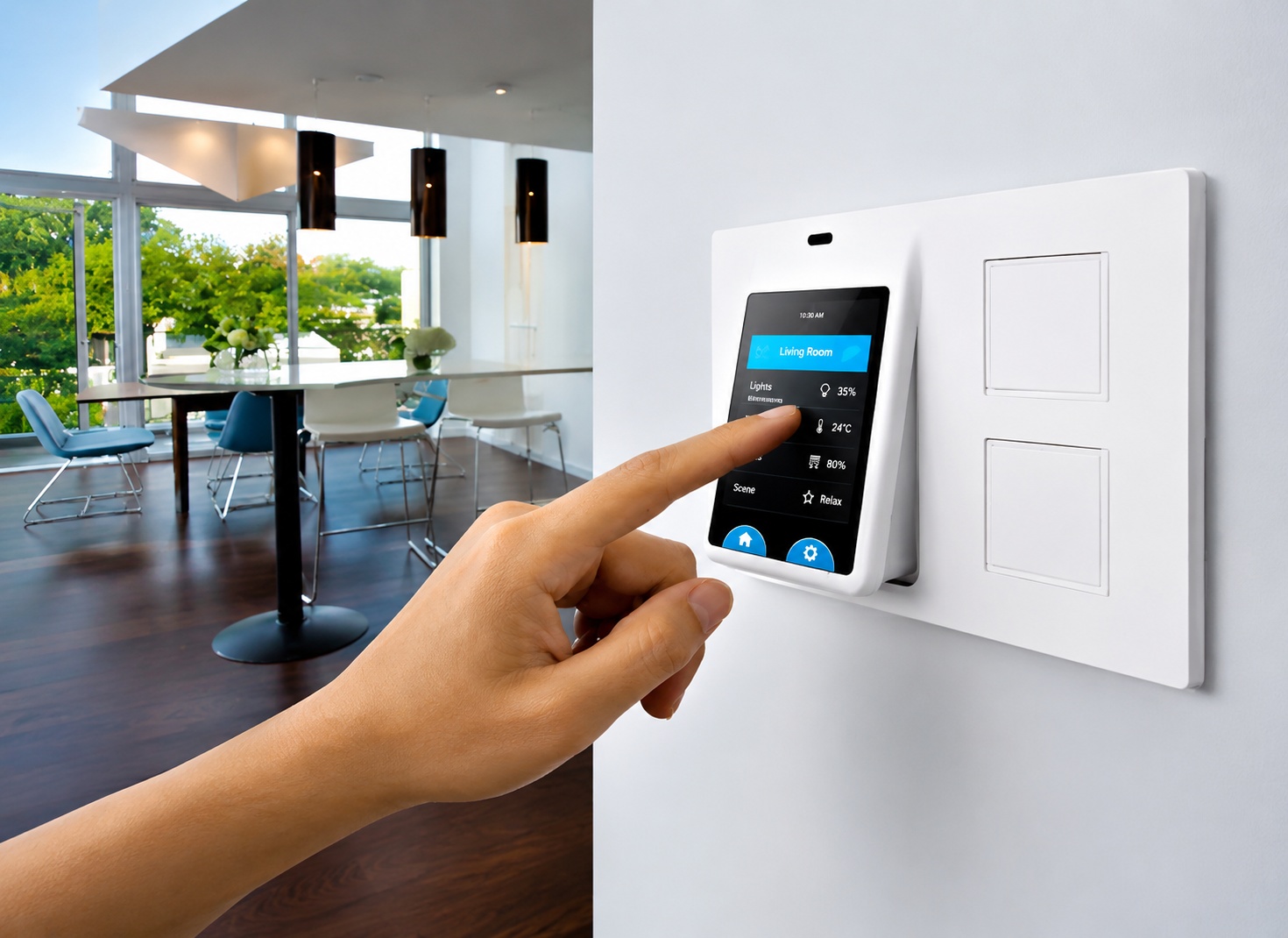
Scene control and centralized dashboards let facility teams see consumption in real time and adjust presets instantly, instead of walking a building floor by floor. This is also what turns lighting control from “a nice feature” into an auditable, reportable system, which matters for Mostadam and SBC documentation.
Calculating Your Own Payback Period
Here’s a simplified version of the calculation a facility manager can actually run.
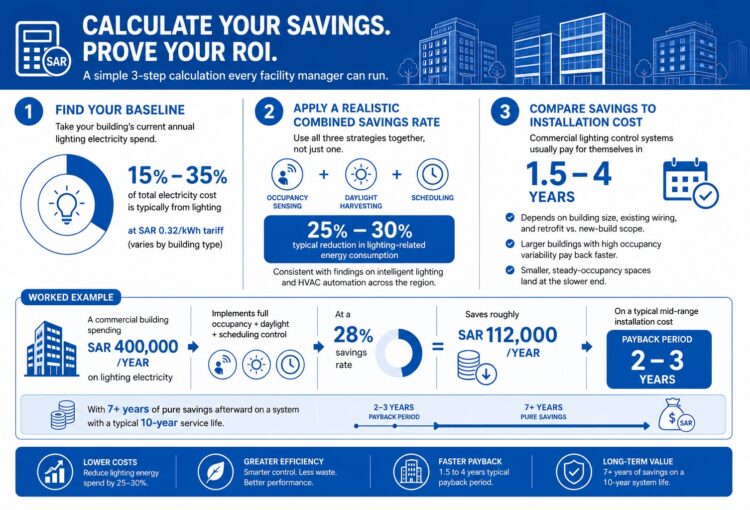
Step 1: Find your baseline. Take your building’s current annual lighting electricity spend. For a mid-size Saudi commercial building with a SAR 0.32/kWh tariff, lighting typically represents 15–35% of total electricity cost, depending on building type.
Step 2: Apply a realistic combined savings rate. Buildings that implement occupancy sensing, daylight harvesting, and scheduling together, not just one of the three, typically see 25–30% reductions in lighting-related energy consumption, consistent with findings on intelligent lighting and HVAC automation across the region.
Step 3: Compare that annual saving to the installation cost. Commercial lighting control installations in Saudi Arabia commonly pay for themselves in 1.5 to 4 years, depending on building size, existing wiring, and how much of the system is retrofit versus new-build. Larger buildings with high occupancy variability (hotels, offices, retail) tend to land at the faster end of that range; smaller, steady-occupancy spaces land at the slower end.
Worked example: A commercial building spending SAR 400,000/year on lighting electricity, implementing full occupancy + daylight + scheduling control at a 28% savings rate, saves roughly SAR 112,000/year. On a typical mid-range installation cost, that lands the payback period around 2–3 years, with 7+ years of pure savings afterward on a system with a typical 10-year service life.
Vision 2030, Saudi Building Code & Mostadam: The Compliance Case for Lighting Control
This is the part most lighting articles skip, and it’s increasingly the part that gets a project approved.
Saudi Building Code (SBC) and the Saudi Green Building Code (SgBC 1001) set minimum standards for energy-efficient design in new construction, and lighting control is one of the more straightforward ways to demonstrate compliance without redesigning a building’s envelope.
Mostadam, the Kingdom’s own green building rating system administered under the Ministry of Municipal and Rural Affairs and Housing, evaluates projects across categories, including Energy and lighting performance (daylight access, circadian, and controlled lighting), which is directly assessed as part of that scoring. Mostadam applies to a wide range of building types, including offices, retail, hospitality, mosques, educational institutions, and is increasingly required on government-linked projects.
The Saudi Energy Efficiency Centre’s target of a 30% cut in power intensity by 2030 isn’t an abstract national goal; it filters down into how new leases, government tenders, and giga-project subcontracts get written. Documented, controllable lighting systems make that documentation easy to produce. Manual systems make it nearly impossible.
ROI by Building Type: Where Lighting Control Pays Back Fastest
Not every building saves the same way. Here’s how the ROI case differs by sector in the Saudi market:
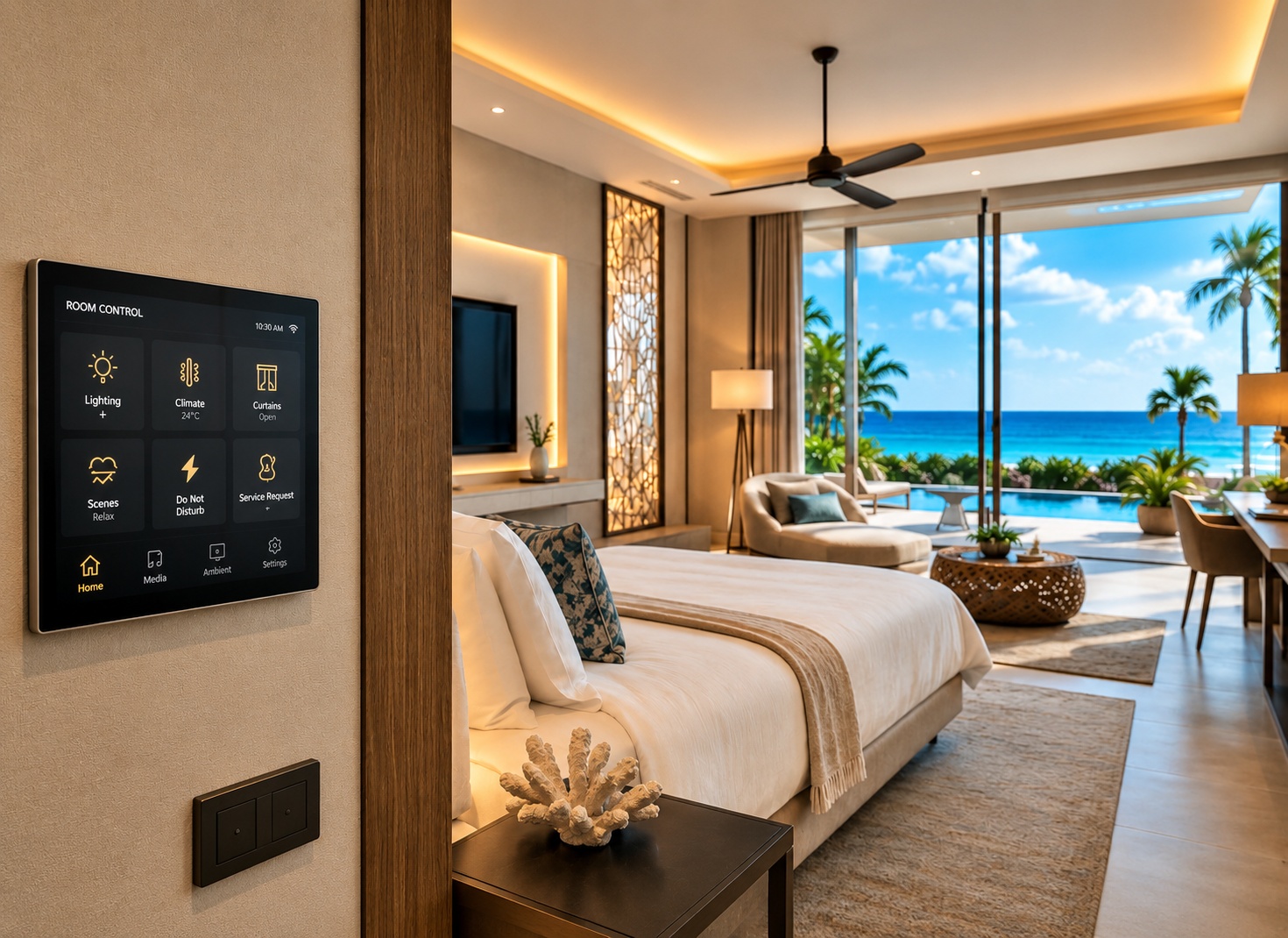
Hotels & hospitality. Guest rooms sit empty for hours during the day, and back-of-house areas are chronically over-lit. Combined with guest room management, lighting control also improves the experience guests actually notice. See our guide to Guest Room Management Systems for how lighting ties into the wider room automation stack.
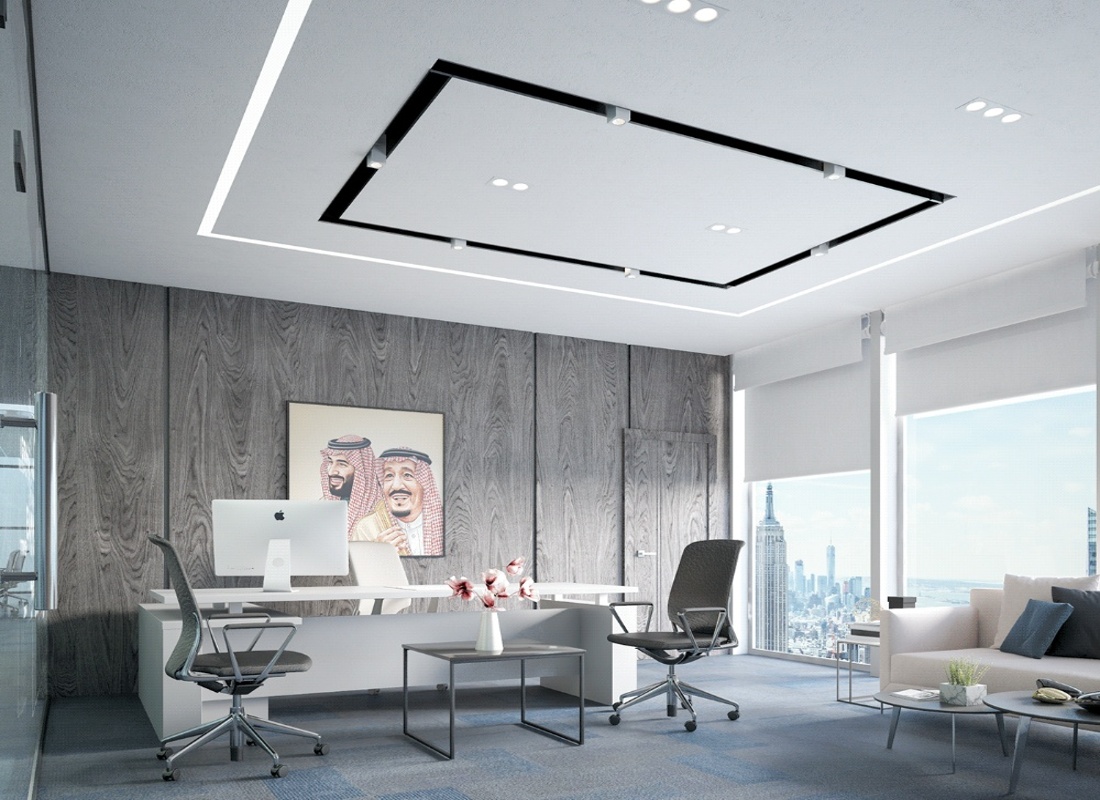
Offices. Open-plan lighting rarely matches real desk occupancy, especially with hybrid work schedules now common in Riyadh, Jeddah, and Dammam. Daylight harvesting near windows is often the single highest-ROI element here.
Retail. Storefront and display lighting can be scheduled precisely to trading hours, while stockrooms and fitting rooms benefit heavily from occupancy sensing.
Mosques and government buildings. Prayer-time-aligned scheduling and presence detection in ancillary spaces (offices, storage, ablution areas) cut waste without affecting the main prayer hall experience.
Villas and residential. Smaller-scale, but daylight dimming and scene presets still meaningfully reduce bills, particularly for larger multi-zone villas with high lighting loads.

DALI-2 vs KNX: A Quick Note on Choosing the Right Protocol
If your ROI case is approved, the next decision is which control protocol to specify.
DALI-2 is purpose-built for lighting: fixture-level addressing, precise dimming, and straightforward integration with sensors. It’s usually the more cost-effective choice when lighting is the primary automation target.
KNX is a broader building automation standard, including lighting, HVAC, blinds, and access control on one bus. It costs more to specify but pays off when a building wants a single unified control layer rather than lighting as an isolated system.
Most commercial Saudi projects that also automate HVAC or blinds lean towards KNX; projects focused purely on lighting ROI often get there faster and cheaper with DALI-2. If you’re still comparing vendors and system types in detail, our companion guide, Lighting Control Suppliers in Saudi Arabia: The Complete Guide to Smarter, Lower-Cost Buildings, walks through supplier selection step by step.
Getting Started: What a Real ROI Assessment Looks Like
Before committing to the budget, a proper lighting control assessment should include:
- A walkthrough audit identifying which zones waste the most (unoccupied areas, over-lit perimeters, mismatched schedules)
- A baseline calculation using your actual SEC billing data, not industry averages
- A realistic savings percentage based on your building type, not a marketing claim
- A payback timeline broken into installation cost versus projected annual savings
- A compliance check against the Saudi Building Code and, where relevant, Mostadam credit requirements
That combination of real audit, real tariff, and real payback number is what turns “lighting control sounds good” into a signed-off project.
Lighting control in Saudi Arabia has moved past being a convenience feature. With flat commercial tariffs, a 30% national efficiency target, and green-building requirements tightening across government and giga-projects, it’s becoming one of the fastest, least disruptive ways to cut costs and stay compliant at the same time. The buildings that run the numbers now will be the ones with the shortest payback and the cleanest compliance paperwork later.
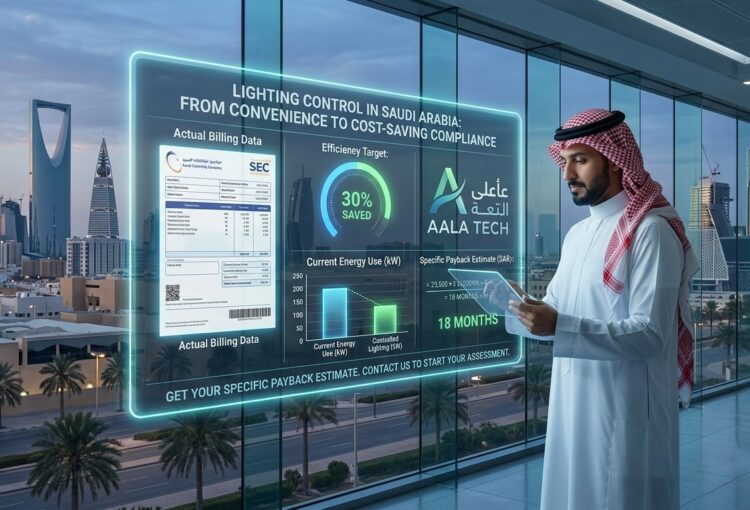
Want a payback estimate specific to your building? Our team can run a lighting audit against your actual SEC billing data and give you a real number, not a rule of thumb. Get in touch with Aala Tech to start your assessment.
Frequency Asked Questions
Most commercial installations pay for themselves in 1.5 to 4 years, depending on building size and existing wiring. Buildings with high occupancy variability, like hotels and offices, tend to pay back faster because occupancy sensing has more waste to eliminate.
Buildings that combine occupancy sensing, daylight harvesting, and scheduling typically cut lighting-related energy use by 25–30%. Since commercial tariffs in Saudi Arabia are a flat SAR 0.32 per kWh, every percentage point saved translates directly into a fixed cost reduction.
The Saudi Building Code and Saudi Green Building Code set minimum energy-efficiency standards for new construction, and Mostadam separately scores lighting performance as part of its Energy category. Lighting control isn’t the only way to meet these, but it’s one of the most direct and well-documented paths to doing so.
DALI-2 is usually more cost-effective when lighting is your primary goal. KNX makes more sense if you also want to automate HVAC, blinds, or access control on the same platform. The right choice depends on whether lighting is a standalone project or part of a wider building automation plan.
Yes, though the payback period is usually longer. Daylight dimming and scene presets still meaningfully cut electricity use in larger villas or multi-zone residences, even if the absolute savings are smaller than a hotel or office tower would see.
It can be retrofitted. Most commercial buildings in Saudi Arabia implementing lighting control are existing properties, not new builds. Retrofit cost and payback time depend mainly on existing wiring and fixture compatibility, which is why a proper site audit matters before estimating ROI.
Yes, though the payback period is usually longer. Daylight dimming and scene presets still meaningfully cut electricity use in larger villas or multi-zone residences, even if the absolute savings are smaller than a hotel or office tower would see.