Emergency Lighting Testing & Remote Monitoring for Saudi Buildings
Emergency lighting only works when it is tested. In Saudi Arabia the rules are clear: every fitting must pass a short monthly functional test and a full 90-minute annual duration test, with written records ready for Civil Defense and the Salamah platform. The problem is not the rules. The problem is that manual testing does not scale.
This guide explains the exact emergency lighting testing maintenance Saudi Arabia requirements, why traditional methods fail in large buildings, and how remote monitoring and self-testing systems turn compliance from a monthly burden into an automatic process.
Looking for reliable emergency lighting solutions in Saudi Arabia? Explore Aala Tech’s emergency lighting and central battery systems with built-in monitoring.
The Official Testing Requirements in Saudi Arabia
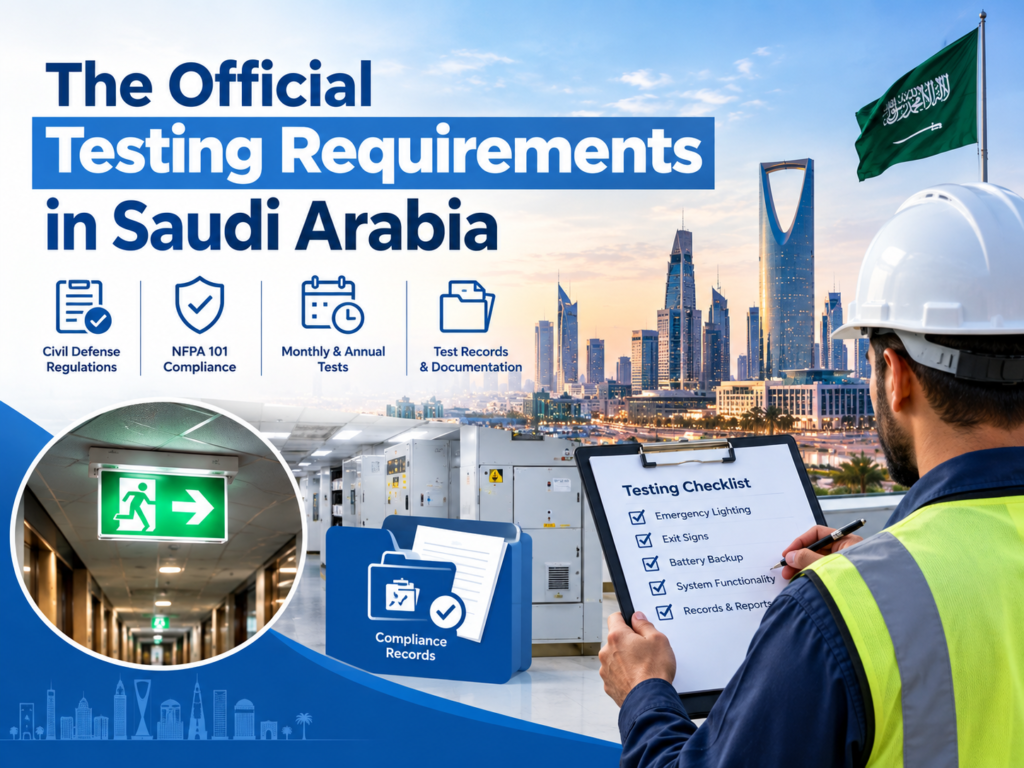
Saudi Civil Defense enforces life-safety rules through the Salamah platform. Emergency lighting falls under the Saudi Building Code (SBC 801), which adopts the core principles of NFPA 101.
Monthly functional test: Every emergency luminaire and illuminated exit sign must be tested for at least 30 seconds, roughly once a month (interval of three to five weeks). The test confirms the fitting switches to battery and illuminates correctly.
Annual full-duration test: Once a year every battery-powered fitting must run for the complete rated period, a minimum of 90 minutes. Any unit that fails must have its battery replaced and be retested.
Documentation: A test that is not written down did not happen. Inspectors expect dated records showing what was tested, the result, faults found, and any repairs. Records should be retained over time so a history is available.
Why Manual Testing Fails in Real Buildings
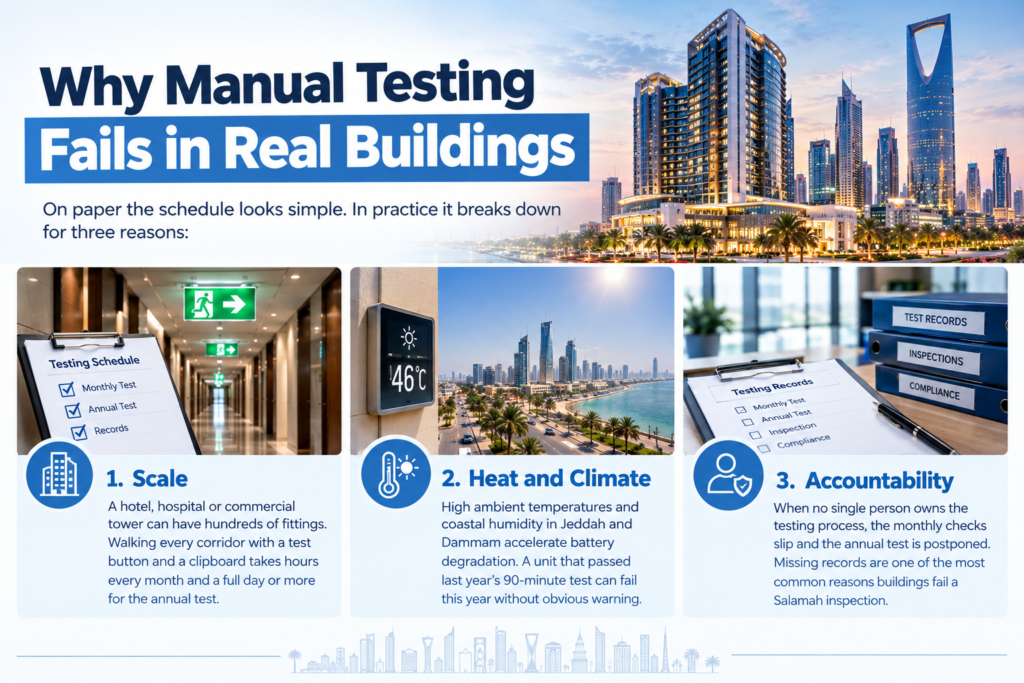
On paper the schedule looks simple. In practice it breaks down for three reasons:
- Scale: A hotel, hospital or commercial tower can have hundreds of fittings. Walking every corridor with a test button and a clipboard takes hours every month and a full day or more for the annual test.
- Heat and climate: High ambient temperatures and coastal humidity in Jeddah and Dammam accelerate battery degradation. A unit that passed last year’s 90-minute test can fail this year without obvious warning.
3. Accountability: When no single person owns the testing process, the monthly checks slip and the annual test is postponed. Missing records are one of the most common reasons buildings fail a Salamah inspection.
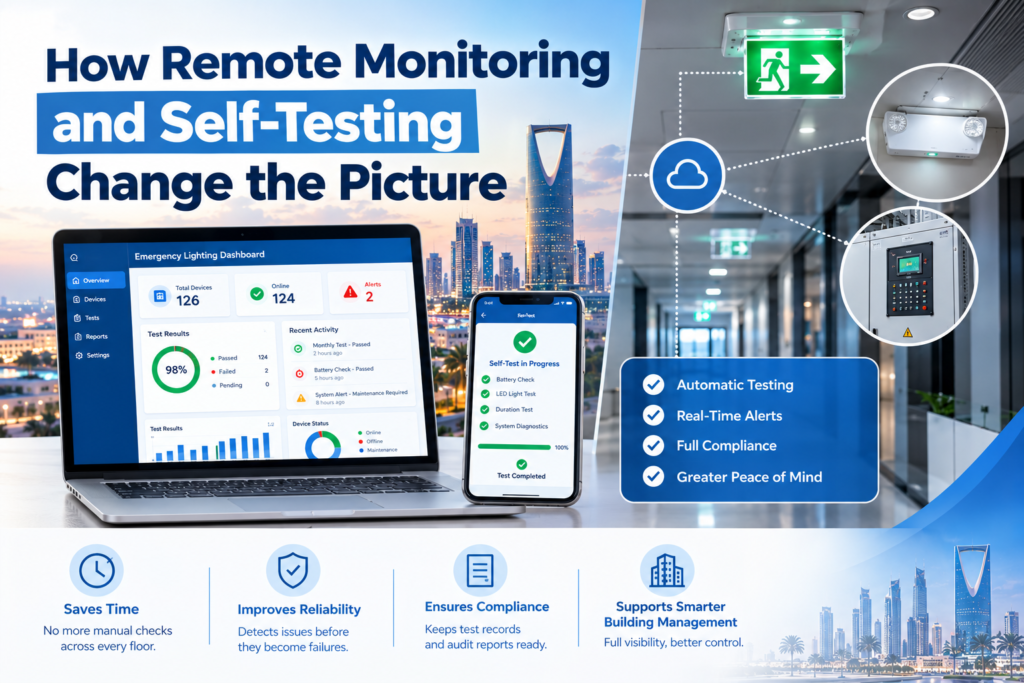
How Remote Monitoring and Self-Testing Change the Picture
Modern emergency lighting systems remove most of the manual work
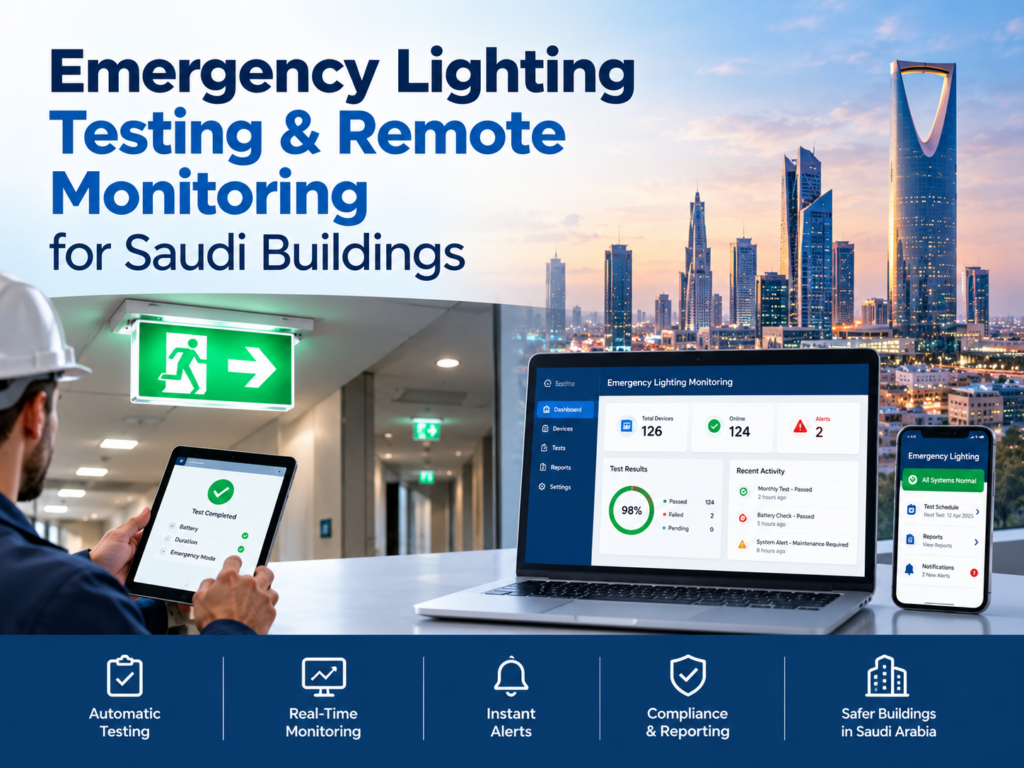
Self-testing luminaires: Each fitting runs its own functional and duration tests on a programmed schedule. It logs the result internally and signals any fault with an LED or through a central gateway.
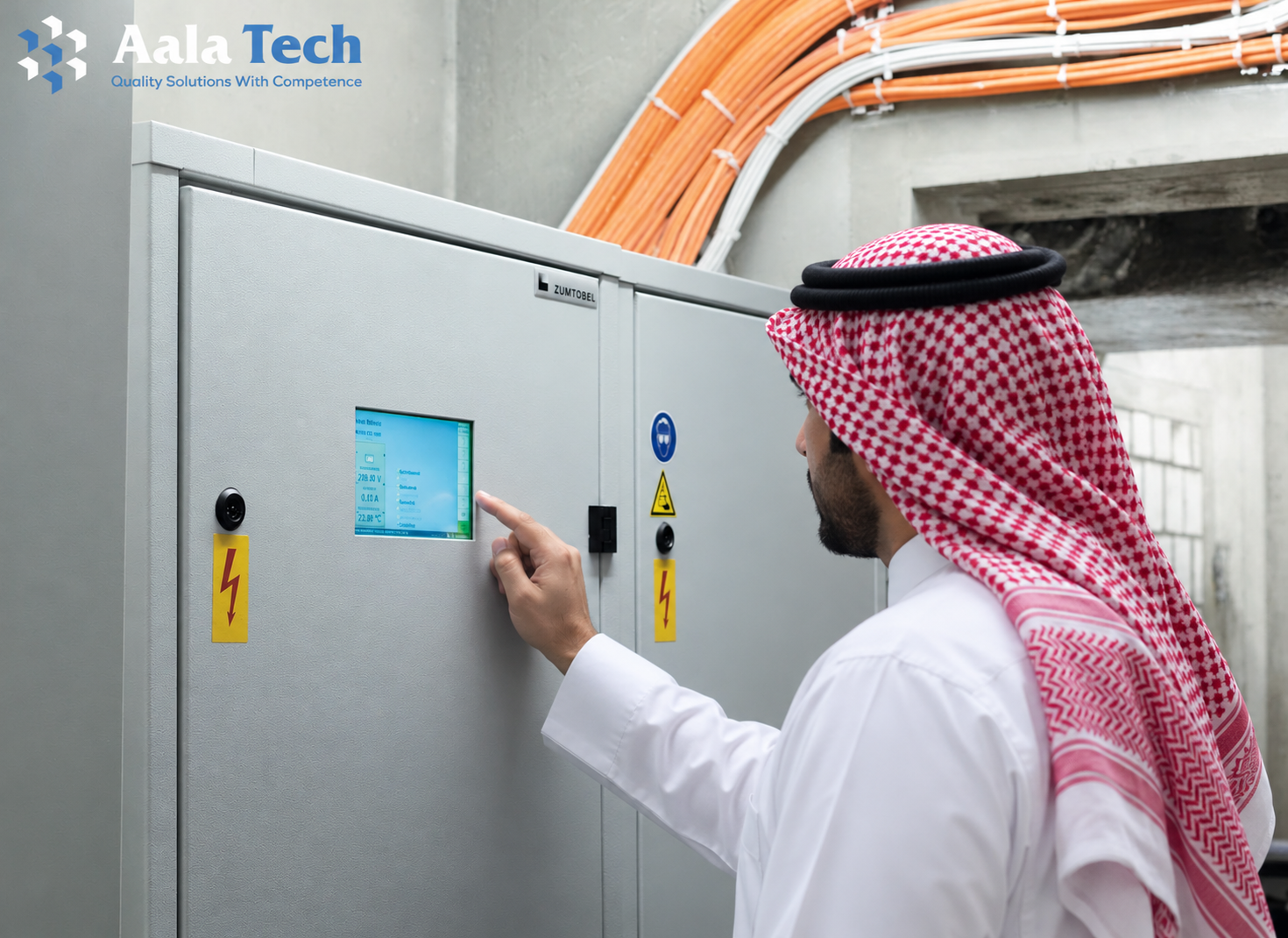
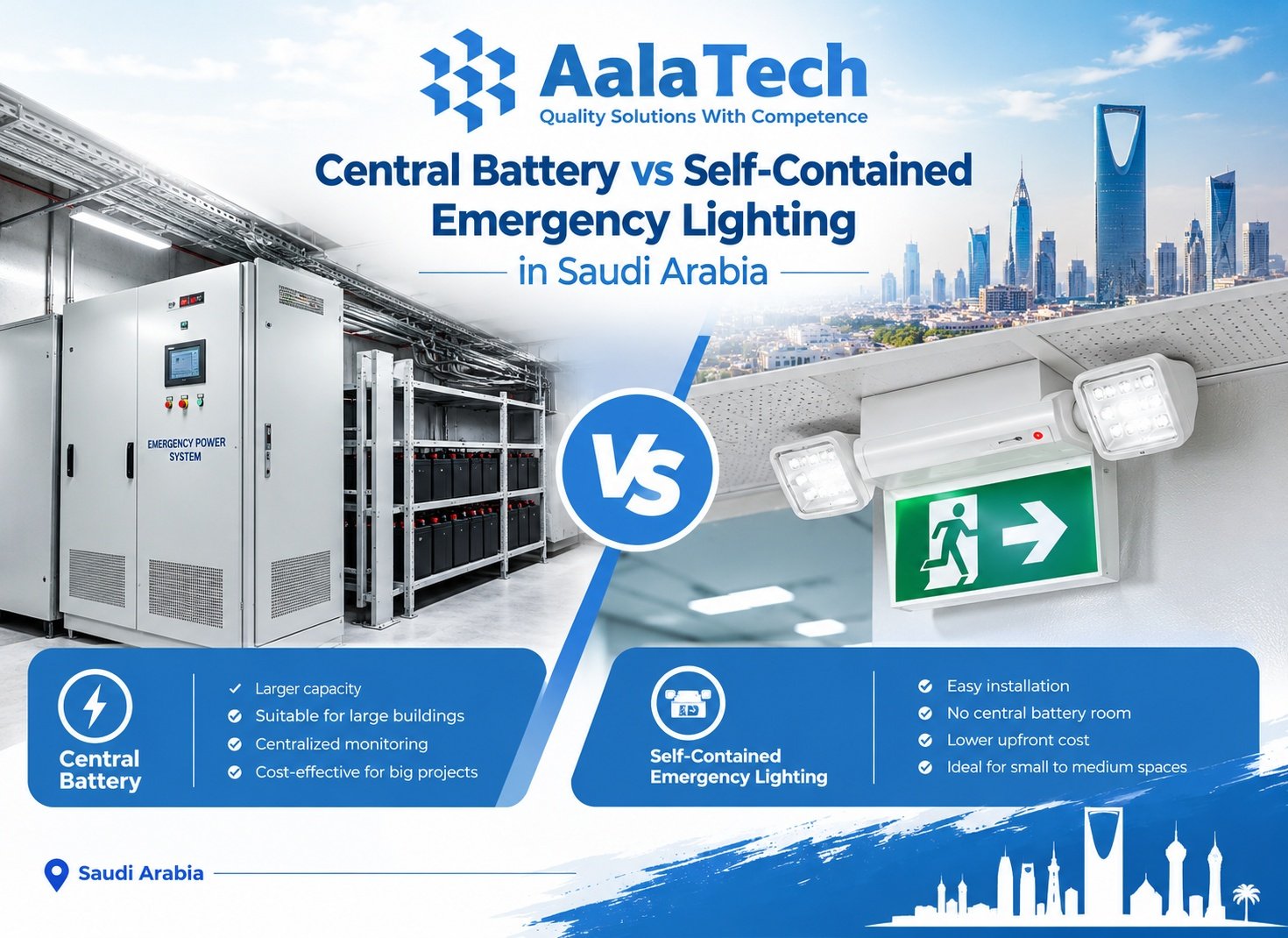
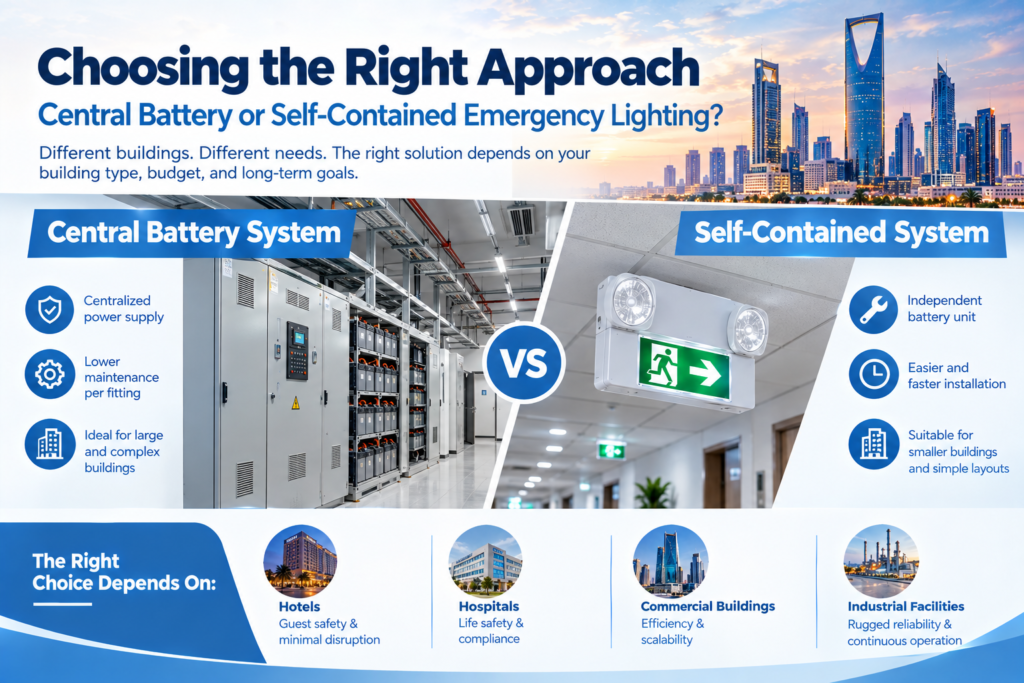
Central battery systems with monitoring: A single battery bank powers multiple “slave” luminaires. The central unit can run automatic tests, monitor every circuit, and report status to a local panel or a Building Management System. One location holds the batteries and the records.
Remote / cloud monitoring: Advanced systems push test results, battery health and fault alerts to a dashboard or email. Facility managers can see compliance status without walking the building. This is especially valuable for multi-site operators and remote properties.
These technologies do not replace the legal requirement to test. They make the required testing automatic, continuous and fully documented, exactly what Civil Defense expects.
Benefits for Facility Managers
- Complete records without extra labour: Every test is logged automatically.
- Early warning of weak batteries: Failures are flagged before the annual inspection.
- Lower long-term cost: Reduced technician time and fewer emergency call-outs.
- Easier Salamah audits: Digital or printed reports are ready on demand.
- Better safety: The system is more likely to work when power actually fails.
For large buildings the combination of a central battery system and remote monitoring usually delivers the best balance of compliance, cost and reliability. For smaller sites, self-testing self-contained units are often sufficient.
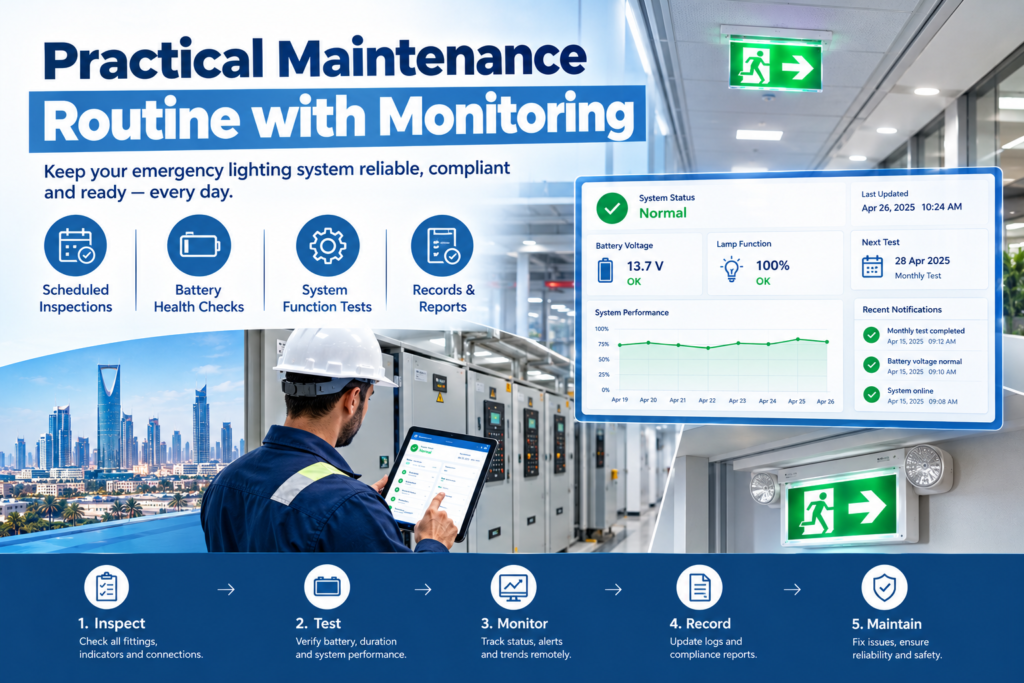
Practical Maintenance Routine with Monitoring
Even with remote systems, a simple routine keeps everything tight:
- Review the monthly automatic test report (or dashboard) every month.
- Investigate and clear any fault alerts within a few days.
- Schedule the annual full-duration verification and keep the record.
- Replace batteries that show declining capacity before they fail the 90-minute test.
- Keep the digital or paper log with your Salamah documentation.
This routine turns emergency lighting testing maintenance Saudi Arabia from a scramble into a predictable process.
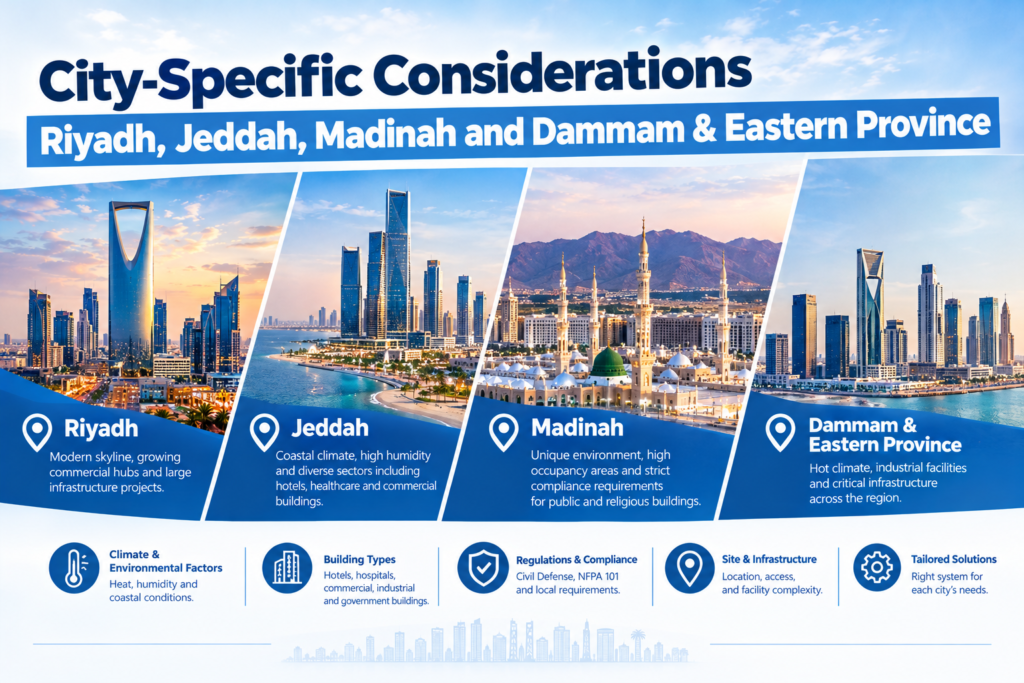
City-Specific Considerations
Riyadh
Dense commercial towers face close scrutiny. An experienced emergency lighting system supplier in Riyadh that offers monitored systems helps keep records inspection-ready. Demand for emergency lighting companies in Riyadh and emergency lighting solutions in Riyadh remains strong.
Jeddah
Coastal humidity shortens battery life. Emergency lighting solutions in Jeddah with remote monitoring catch degradation early. Facility managers look for emergency lighting companies in Jeddah and an emergency lighting system supplier in Jeddah.
Madinah
Seasonal peaks put pressure on hotels and public buildings. Reliable emergency lighting solutions in Madinah with automatic testing reduce risk. Search interest in emergency lighting companies in Madinah and emergency lighting system supplier in Madinah reflects this need.
Dammam & Eastern Province
Industrial sites face heat and dust. Emergency lighting solutions in Dammam that include central monitoring improve reliability. Interest in emergency lighting companies in Dammam and emergency lighting system supplier in Dammam continues to grow.
Choosing the Right Approach
Ask these questions:
- How many emergency fittings does the building have?
- Does the facilities team have time for monthly manual testing?
- Is heat or humidity a significant factor?
- Do you need records available for multi-site reporting or remote audits?
If the answer points to scale, climate stress or limited manpower, a monitored central battery system or self-testing luminaires will usually pay for themselves in reduced labour and fewer failed inspections.
Aala Tech designs, supplies and maintains emergency lighting systems with automatic testing and remote monitoring capabilities. As a leading emergency lighting system supplier in Saudi Arabia, we help buildings in Riyadh, Jeddah, Madinah and Dammam meet Civil Defense requirements with less effort and greater confidence.
Ready to simplify emergency lighting testing maintenance Saudi Arabia? Talk to our team about monitored emergency lighting solutions in Saudi Arabia or call +966 56 921 6835.
Frequency Asked Questions
Monthly functional test of at least 30 seconds and annual full-duration test of 90 minutes, both with written records, enforced through Civil Defense and the Salamah platform.
No. It performs and records the required tests automatically so the legal obligations are met with far less manual work.
Yes, provided the system logs results and any failures are addressed promptly. Self-testing is explicitly permitted under NFPA 101 principles adopted in Saudi Arabia.
In larger multi-storey buildings where fixture counts are high and centralised records simplify compliance.
Look for suppliers with local engineering presence, Civil Defense experience and systems that include automatic testing or central monitoring. Aala Tech provides coverage across Riyadh, Jeddah, Madinah and Dammam.