Emergency Lighting System Cost in Saudi Arabia: What Really Drives the Price

Emergency Lighting System Cost in Saudi Arabia: What Really Drives the Price

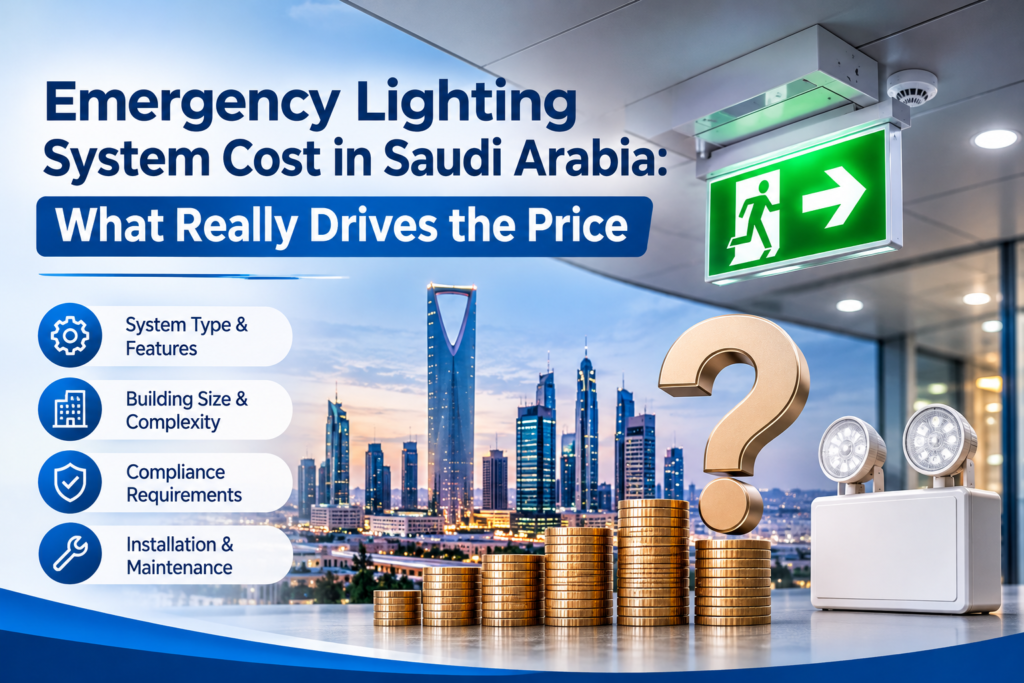
When facility managers ask about the emergency lighting system cost Saudi Arabia, they usually want a single number. The real answer is more useful: the price is driven by a handful of clear factors, and the cheapest system on day one is often the most expensive over ten years.

Emergency Lighting System Cost in Saudi Arabia: What Really Drives the Price

This guide breaks down what actually determines the cost of an emergency lighting system in the Kingdom, compares self-contained and central battery approaches, and shows how to evaluate total cost of ownership rather than just the initial quote.

Need a compliant, cost-effective system? Explore Aala Tech’s emergency lighting and central battery systems.

The Two Big Cost Categories

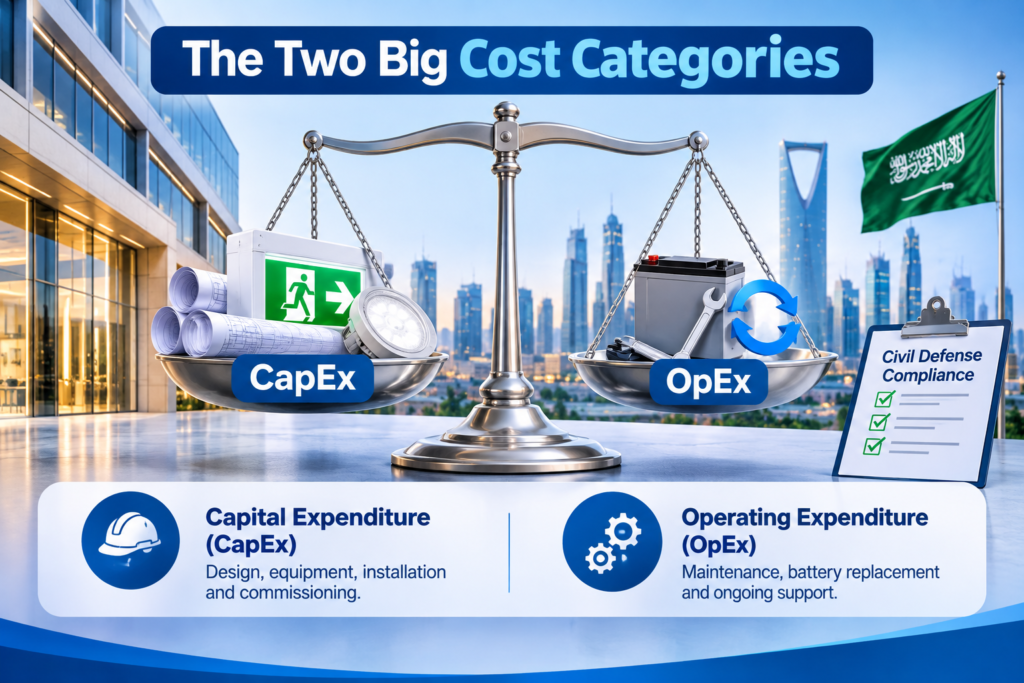
Every emergency lighting project has two cost layers:

Capital expenditure (CapEx): Design, equipment, cabling, installation, testing and commissioning.

Operating expenditure (OpEx): Battery replacements, labour for monthly and annual tests, access equipment, repairs, and eventual system upgrades.

Capital expenditure (CapEx) and Operating expenditure (OpEx

In Saudi Arabia the climate and Civil Defense documentation requirements push OpEx higher than many owners expect. Heat shortens battery life. Large buildings make manual testing expensive. Missing records can delay Salamah approval and create extra cost.

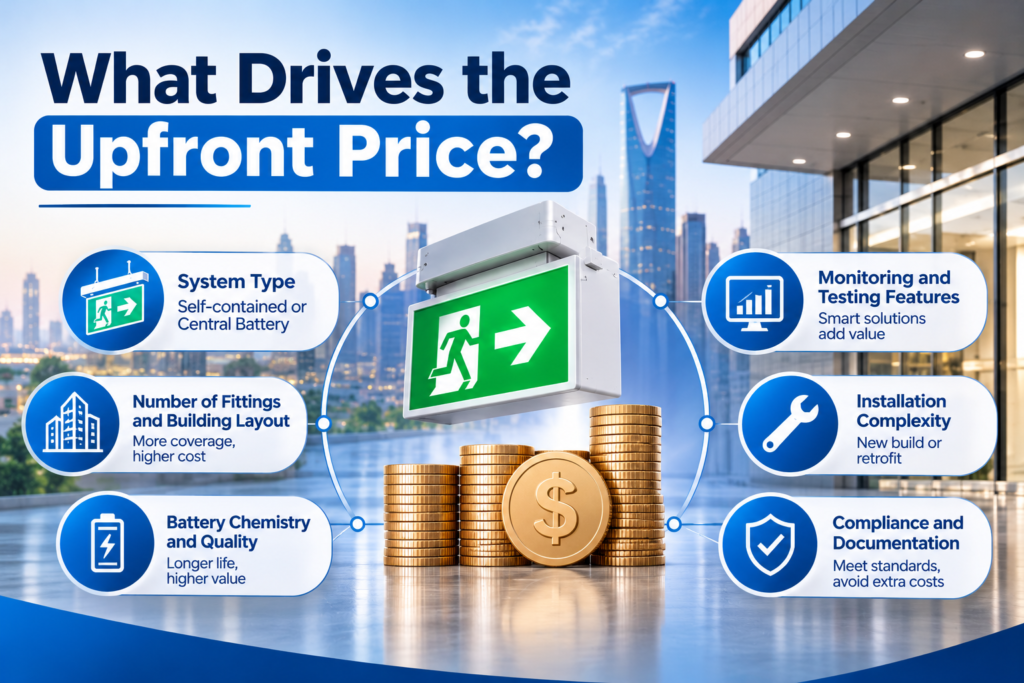
What Drives the Upfront Price

1. System Type

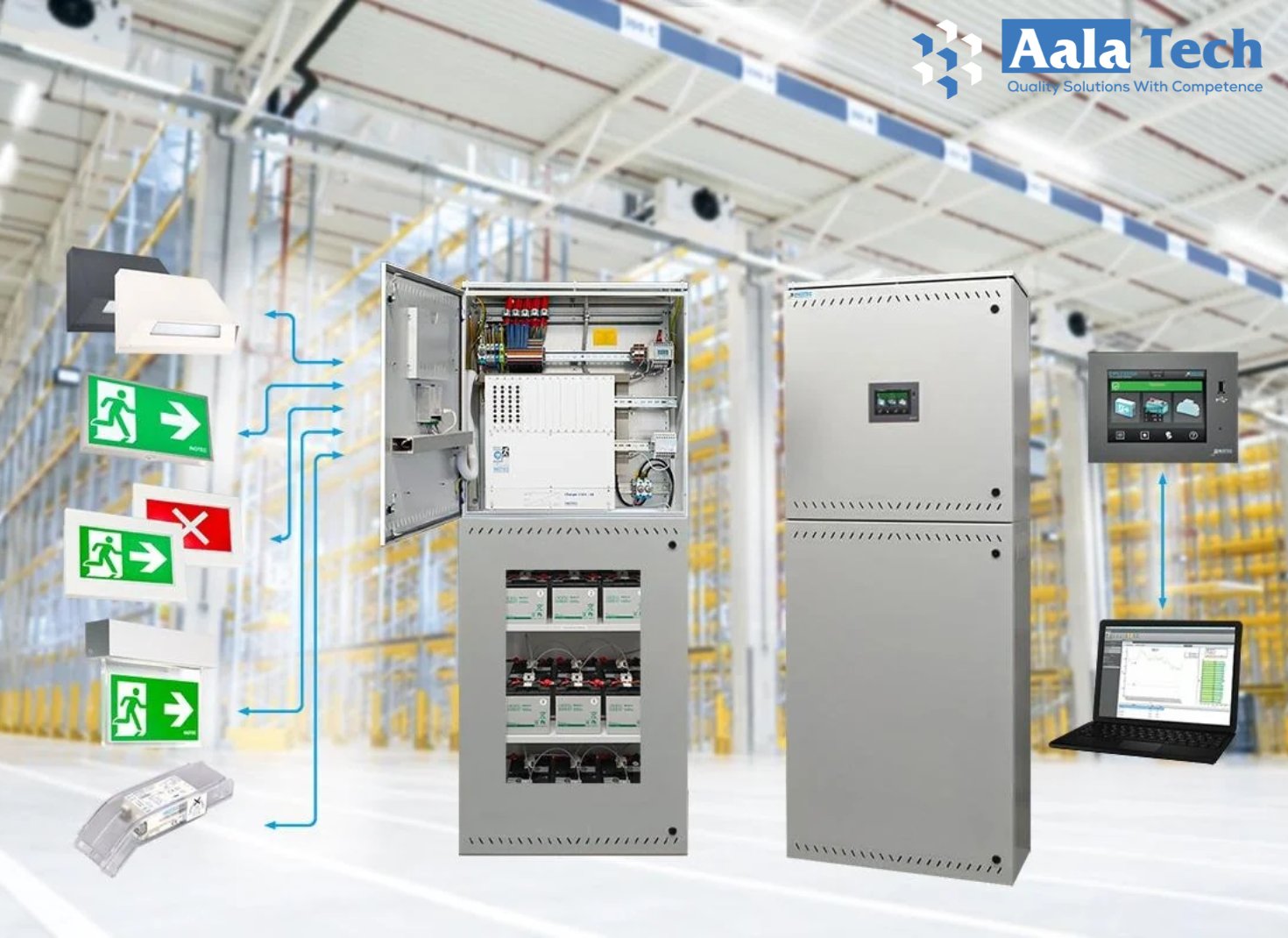
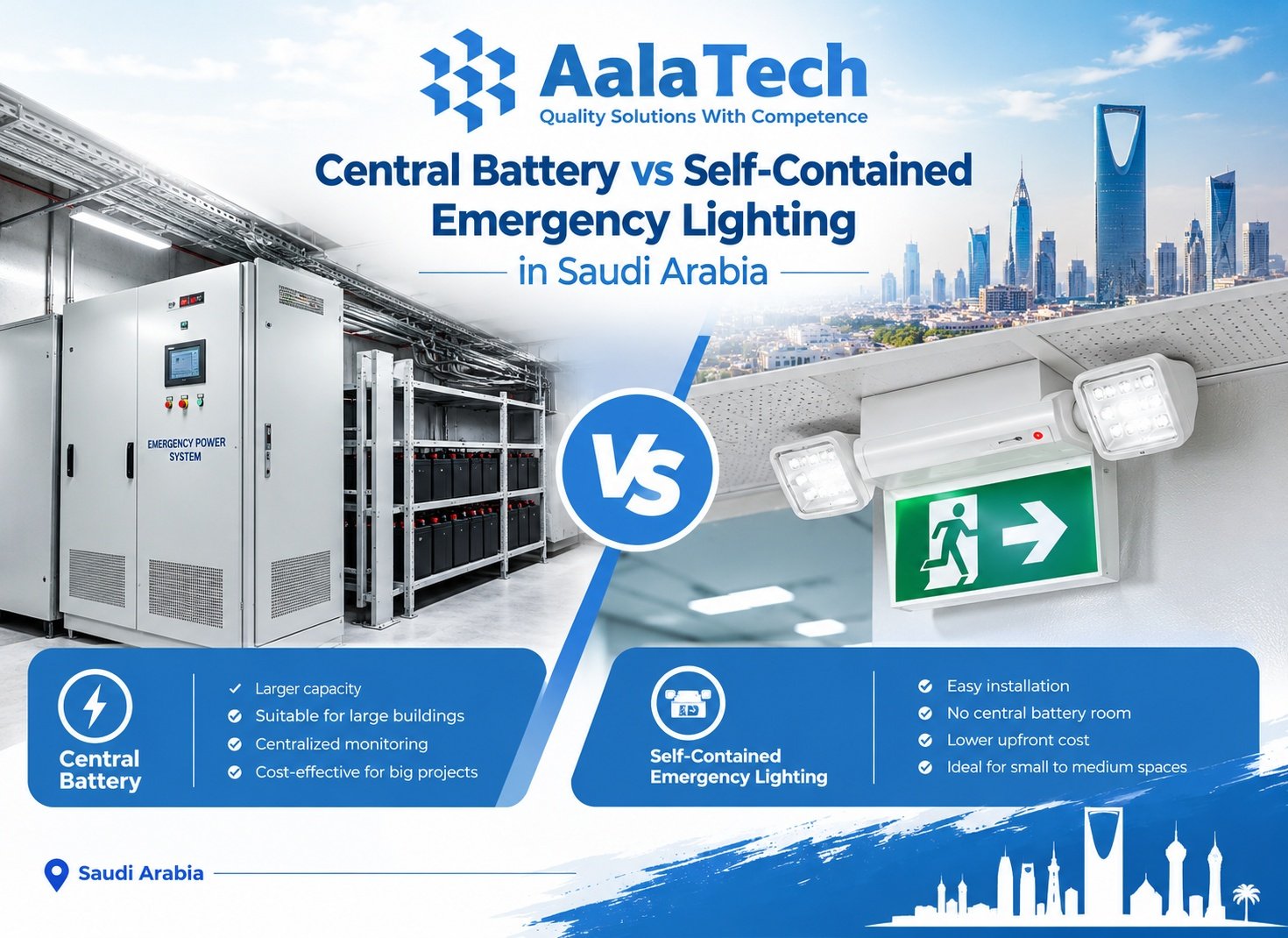
  • Self-contained units: Each luminaire has its own battery and charger. Lower equipment cost and simpler installation (standard cabling). Best for small to medium buildings or retrofits.
  • Central battery systems: One battery bank powers multiple luminaires. Higher initial cost for the central unit, fire-rated cabling and battery room, but far lower ongoing battery and testing costs.

Industry experience shows self-contained systems usually win on first cost below roughly 50–100 fittings. Above that range a central system often becomes competitive on lifecycle cost.

2. Number of Fittings and Building Layout

More egress routes, stairwells, large floor plates and complex exit paths mean more luminaires and exit signs. High-rise or multi-building sites also increase cabling and labor.

3. Battery Chemistry and Quality

Lead-acid batteries are cheaper upfront but typically last 3–5 years in Saudi conditions. Lithium-iron-phosphate (LiFePO4) and better quality options cost more initially but last longer and hold capacity better in heat.

4. Monitoring and Testing Features

Basic systems require fully manual testing. Self-testing luminaires or central systems with automatic testing and remote monitoring add to CapEx but sharply reduce labour and the risk of failed inspections.

5. Installation Complexity

New construction is usually cheaper than retrofit. Fire-rated cabling, battery rooms, BMS integration, and working in occupied buildings all raise labour costs.

6. Compliance and Documentation

SASO-recognised equipment, approved drawings, commissioning reports and a clear test regime are not optional. Cutting corners here often creates higher costs later when Civil Defense requires remedial work.

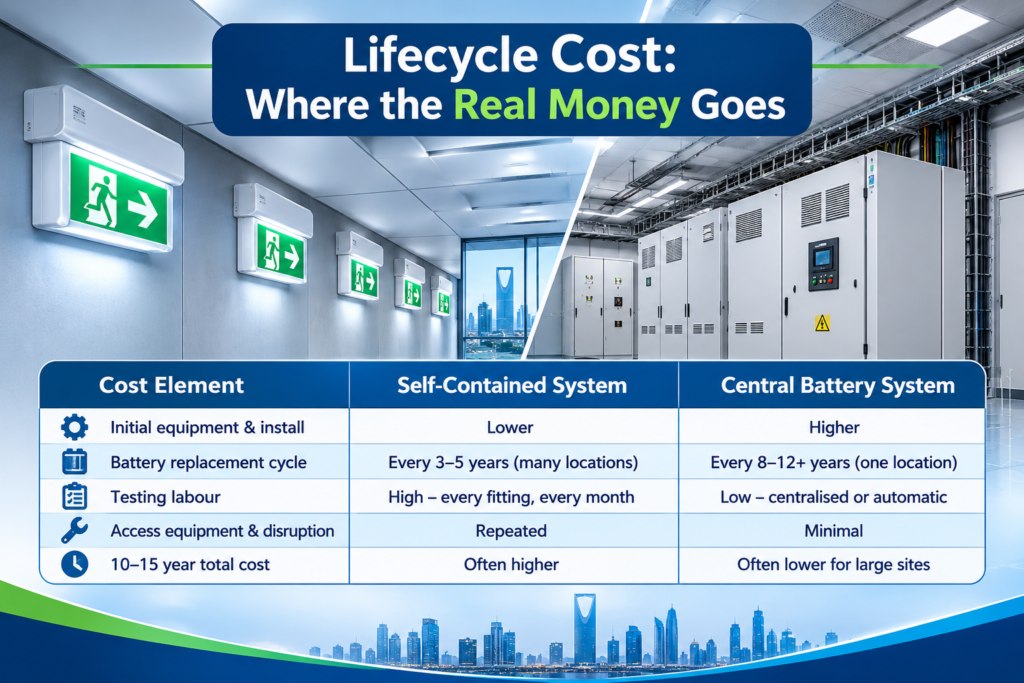
Lifecycle Cost: Where the Real Money Goes

A typical pattern seen across commercial projects:

In hot climates the battery replacement cost of self-contained systems rises further because heat accelerates degradation. Central systems keep batteries in a controlled environment, extending life and reducing the number of replacements. For buildings with more than about 100 fittings, the higher CapEx of a central battery system is frequently recovered within 8–12 years through lower OpEx.

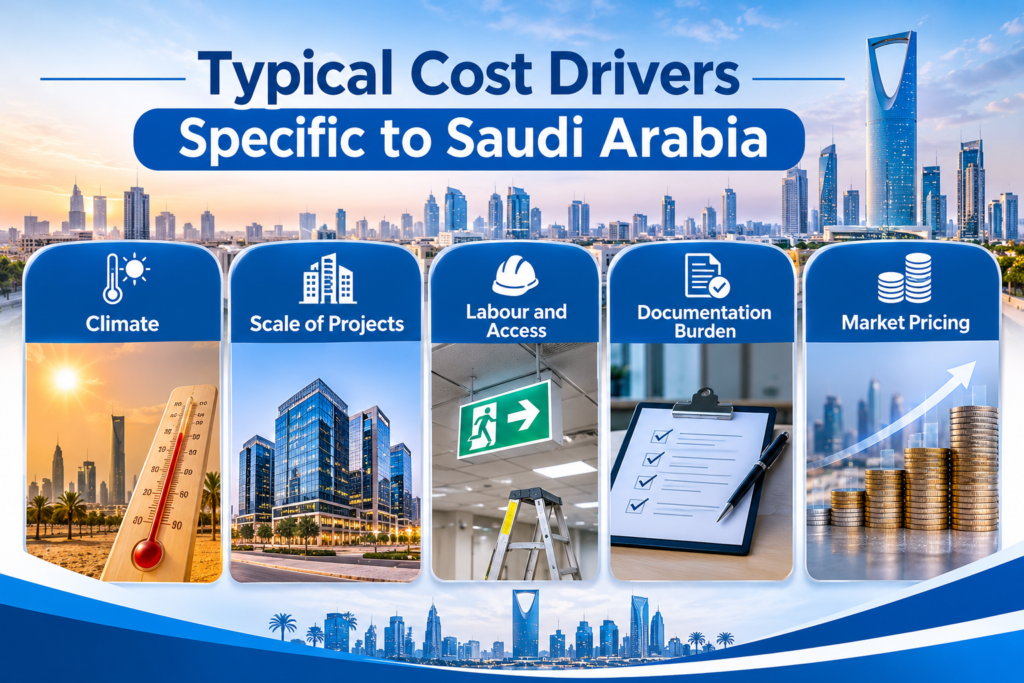
Typical Cost Drivers Specific to Saudi Arabia

  • Climate: High ambient temperatures and coastal humidity (Jeddah, Dammam) shorten the life of batteries located in ceiling voids.
  • Scale of projects: Vision 2030 commercial, hospitality and industrial buildings often have high fixture counts, favouring central systems on lifecycle cost.
  • Labour and access: Manual testing across large floor plates or high ceilings is expensive and time-consuming.
  • Documentation burden: Incomplete test records are a common cause of Salamah delays, creating indirect cost.
  • Market pricing: Larger commercial projects can see installed costs well into the tens of thousands of SAR; exact figures depend on specification and site conditions.

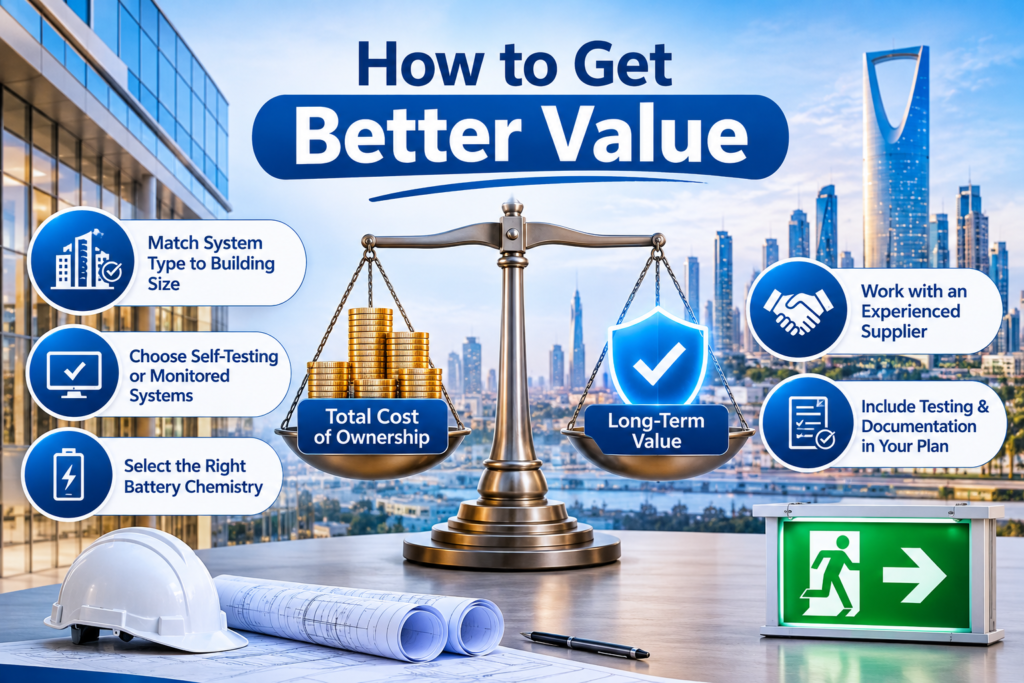
How to Get Better Value

  1. Decide on the basis of total cost of ownership, not the lowest day-one quote.
  2. Match system type to building size, self-contained for smaller sites, central battery for larger or multi-storey buildings.
  3. Specify self-testing or monitored systems where labour is expensive or records must be perfect.
Balancing Cost and Long-Term Value

4. Choose battery chemistry suited to Saudi conditions.

5. Work with a supplier who designs, installs and maintains, fragmented responsibility usually increases long-term cost.

6. Include the testing and documentation regime in the original scope so it is not an afterthought.

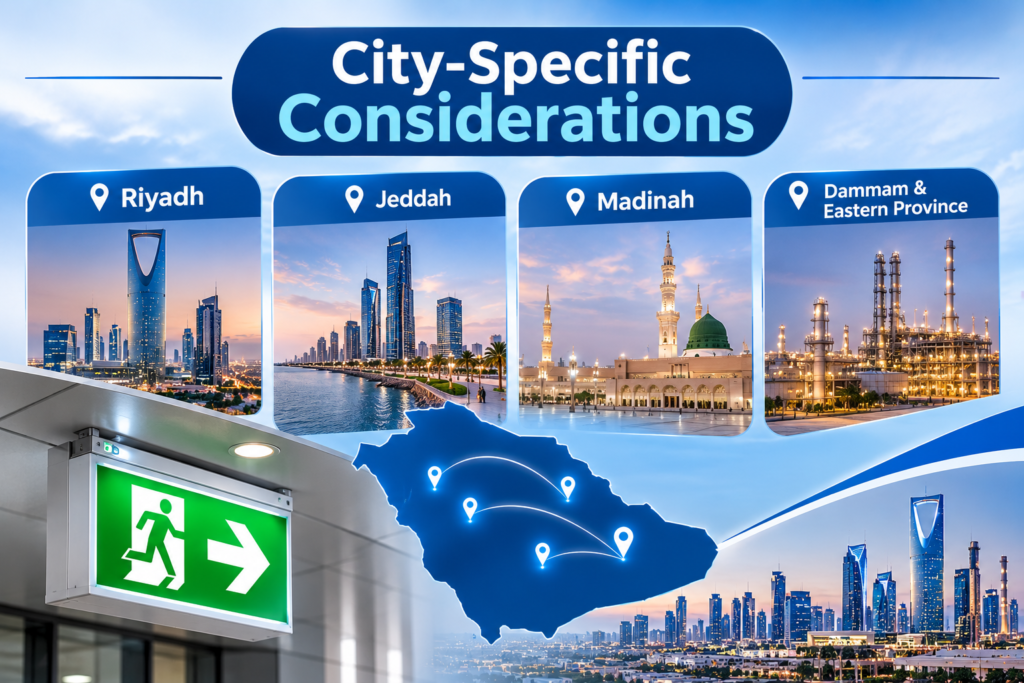
City-Specific Considerations

Riyadh

Dense commercial towers favour systems that keep testing records simple. An experienced emergency lighting system supplier in Riyadh can help balance CapEx and OpEx. Demand remains strong for emergency lighting companies in Riyadh and emergency lighting solutions in Riyadh.

Jeddah

Humidity accelerates battery ageing. Emergency lighting solutions in Jeddah that use central or high-quality self-testing units reduce replacement frequency. Facility managers seek emergency lighting companies in Jeddah and an emergency lighting system supplier in Jeddah.

Madinah

Seasonal occupancy peaks make reliable, low-maintenance systems valuable. Emergency lighting solutions in Madinah with automatic testing help control long-term cost. Interest in emergency lighting companies in Madinah and emergency lighting system supplier in Madinah continues.

Dammam & Eastern Province

Industrial sites face heat and dust. Emergency lighting solutions in Dammam that centralise batteries improve lifecycle economics. Search activity around emergency lighting companies in Dammam and emergency lighting system supplier in Dammam is rising with industrial growth.

Across the Kingdom the most reliable partners are established emergency lighting companies in Saudi Arabia that offer both system types, realistic lifecycle advice, and local service.

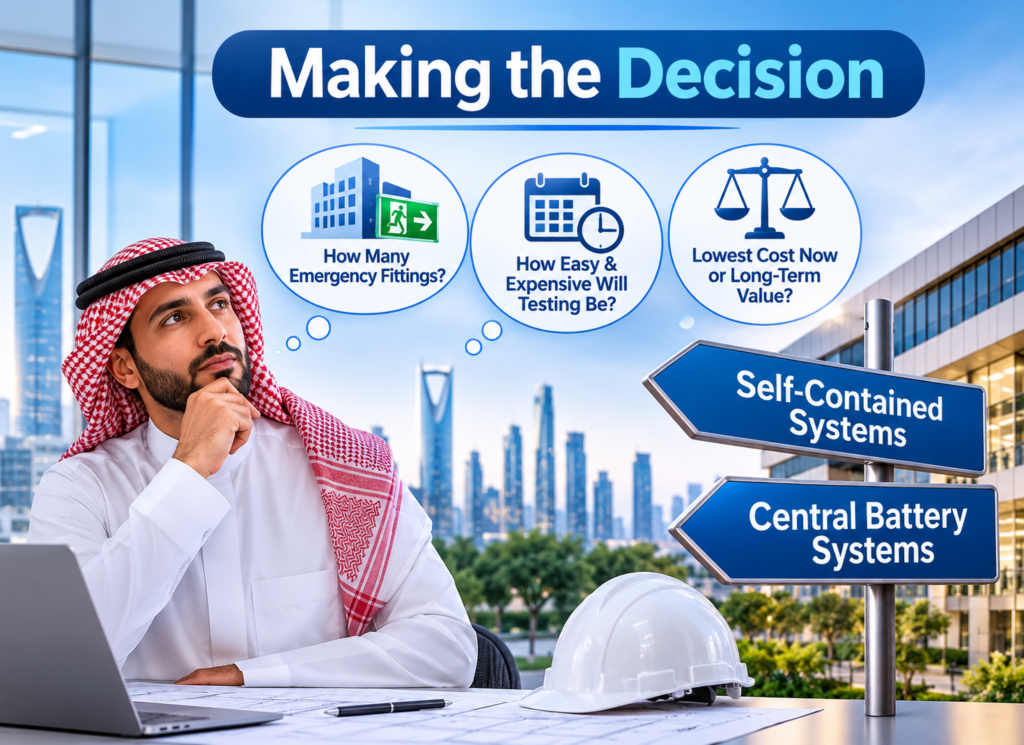
Making the Decision

Ask three practical questions:

  • How many emergency fittings will the building need?
  • How easy (and expensive) will monthly and annual testing be?
  • Do you prioritise lowest first cost or lowest cost over 10–15 years?

If the building is large, multi-storey or located in a harsh climate zone, a central battery system with monitoring often delivers better overall value. For smaller or simpler sites, quality self-contained units remain a sound and lower-CapEx choice.

Emergency Lighting Decision Guide

Aala Tech designs, supplies and maintains emergency lighting systems across Saudi Arabia. As a leading emergency lighting system supplier in Saudi Arabia, we help clients understand the real emergency lighting system cost Saudi Arabia and choose the solution that meets Civil Defense requirements without unnecessary long-term expense.

Want a realistic cost assessment for your building? Talk to our team about emergency lighting solutions in Saudi Arabia or call +966 56 921 6835.

Frequency Asked Questions

Related Reading

Get a Quote